
Open floor plans give you amazing opportunities to create spaces that flow beautifully together.
But without walls to define each area, you might feel a bit lost about how to organize everything.
The good news is that with smart decorating choices, you can create distinct zones while keeping that airy, connected feeling you love. Let’s explore gorgeous ways to make your open-concept space work perfectly for your lifestyle.
01. Maintain Clear Visual Pathways

Credit: Twelve 15 Design Studio
When you’ve got a half wall or peninsula separating your kitchen from your living space, you’ll want to keep decorations minimal.
This simple approach lets your eyes travel freely between rooms without feeling cluttered. Clear sightlines make your entire space feel more open and intentional, giving you that seamless flow you’re after.
02. Incorporate Oversized Mirrors
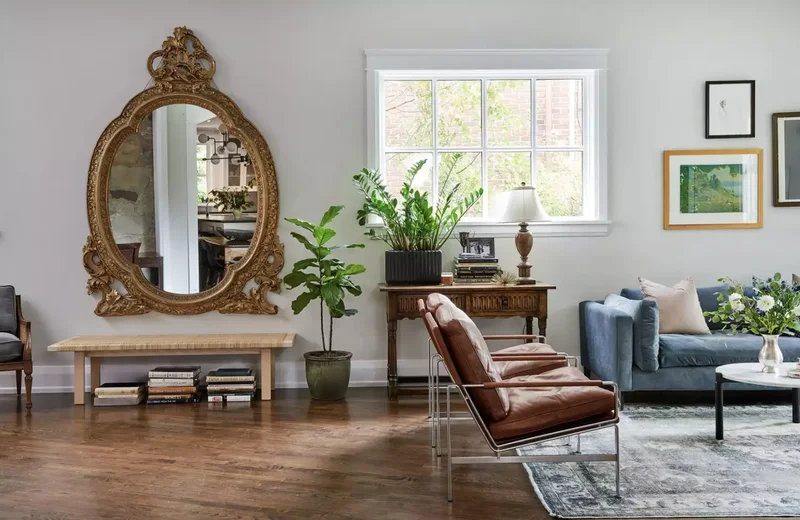
Credit: Ashley Montgomery Design
A large statement mirror works wonders for anchoring a small conversation nook or entrance area within your bigger open space.
You can go sleek and modern for contemporary vibes, or choose a vintage piece with ornate gilded details for instant character. Either way, mirrors reflect light and make your space feel even more expansive than it already is.
03. Feature Statement Wallpaper
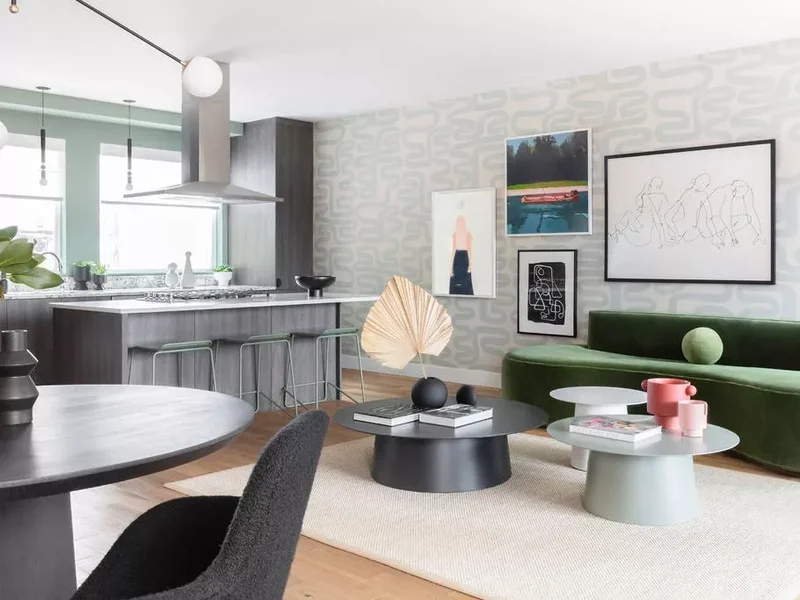
Credit: Michelle Boudreau Design
Transform your longest wall with eye-catching patterned wallpaper that ties your different zones together beautifully.
When you pull similar colors from the wallpaper into other areas of the room, everything feels harmonious and intentional. This trick creates cohesion without making your space feel repetitive or boring.
04. Position Matching Sofas
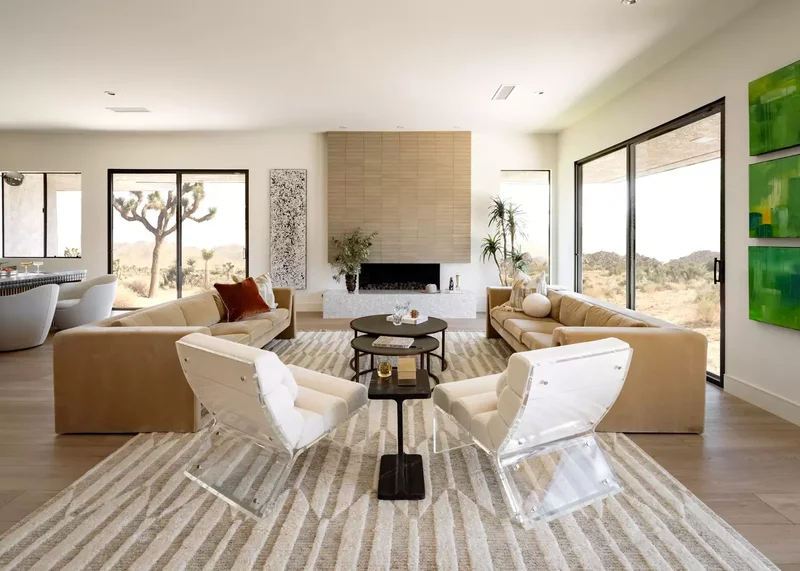
Credit: Brophy Interiors
You can create an intimate room-within-a-room feeling by placing two identical sofas facing each other.
Add a generous area rug underneath and position a pair of armchairs at one end to complete your conversation zone. This arrangement works beautifully around a fireplace, giving you the perfect gathering spot for family and friends.
05. Introduce Vibrant Accent Pieces
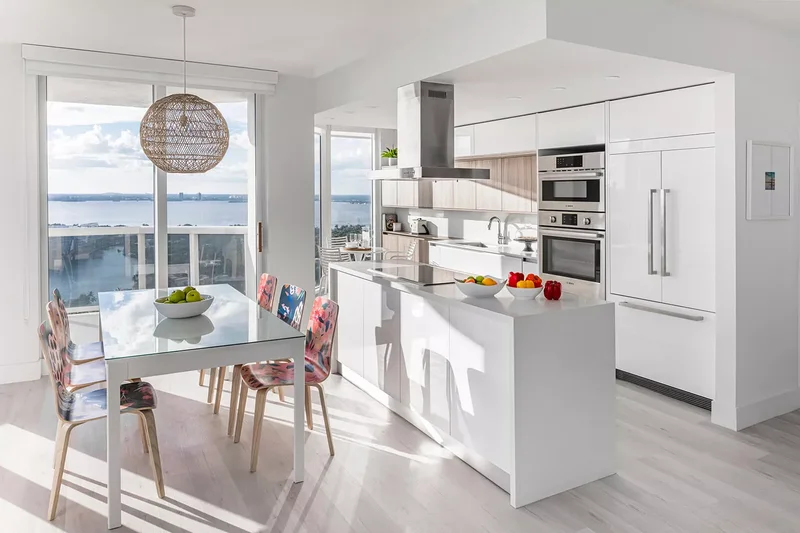
Credit: Maite Granda
Colorful dining chairs instantly define your eating area within an open kitchen layout.
Don’t be afraid to mix different chair styles and colors for an eclectic, collected-over-time look. This playful approach adds personality while clearly marking where the dining zone begins and ends without needing any walls.
06. Install Smart Storage Solutions
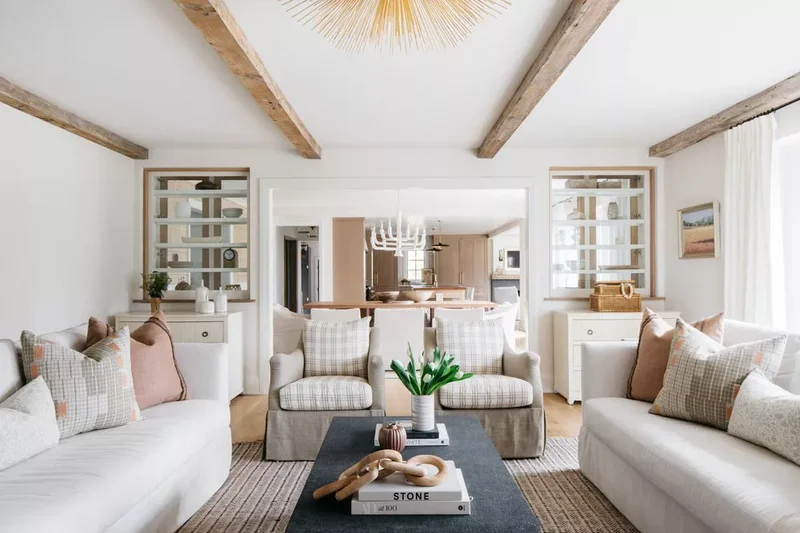
Credit: Kate Marker Interiors
Built-in shelving creates subtle separation between your living and dining areas while keeping that open, airy feeling intact.
Open shelves give you display space for books and decorative objects without blocking light or views. Plus, you’ll love the extra storage for keeping your open-concept space organized and clutter-free.
07. Create a Welcoming Entry Spot
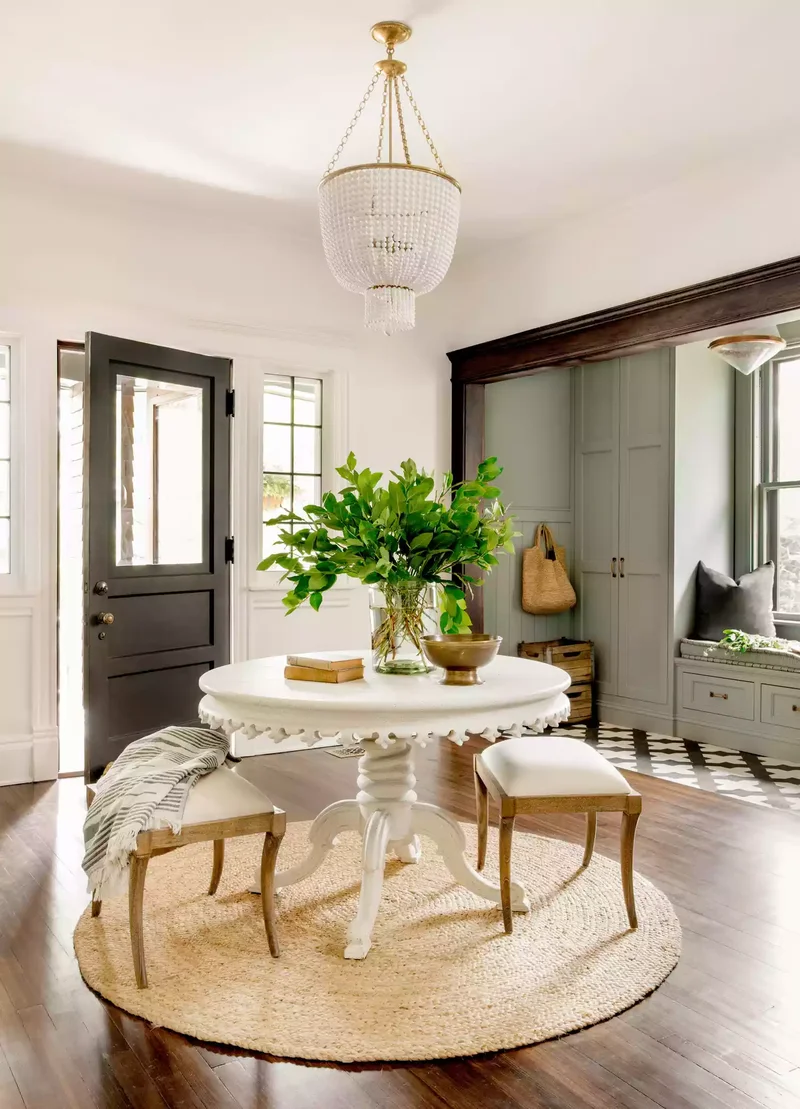
Credit: Becca Interiors
Even without a formal foyer, you can establish an entry zone with a beautiful round table floating in the center.
Place it on a small area rug and top it with a stunning arrangement of branches or flowers. This simple setup immediately tells guests where to pause when they enter your home.
08. Experiment With Contrasting Shades
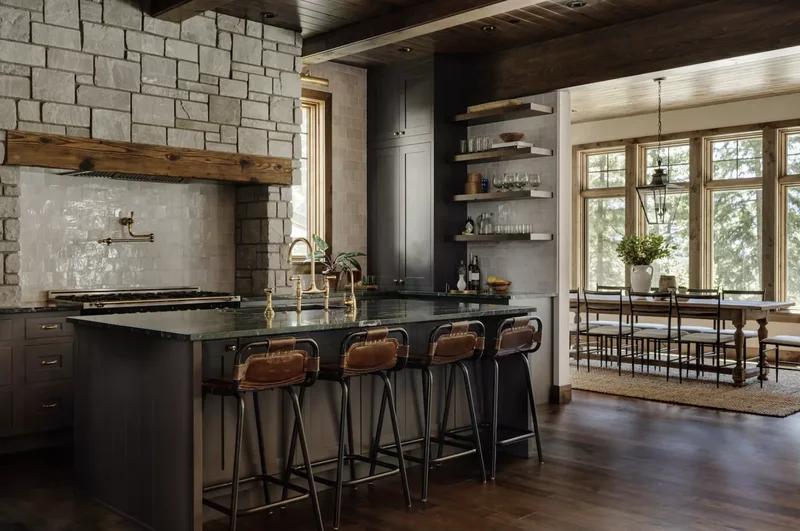
Credit: Jessica Nelson Design
You’ll create incredible dimension by playing with light and dark tones in adjoining spaces.
Try pairing a moody, dramatic kitchen with a bright, airy dining area for striking contrast. This technique helps each zone maintain its own personality while still feeling connected to the larger space around it.
09. Incorporate Statement Seating
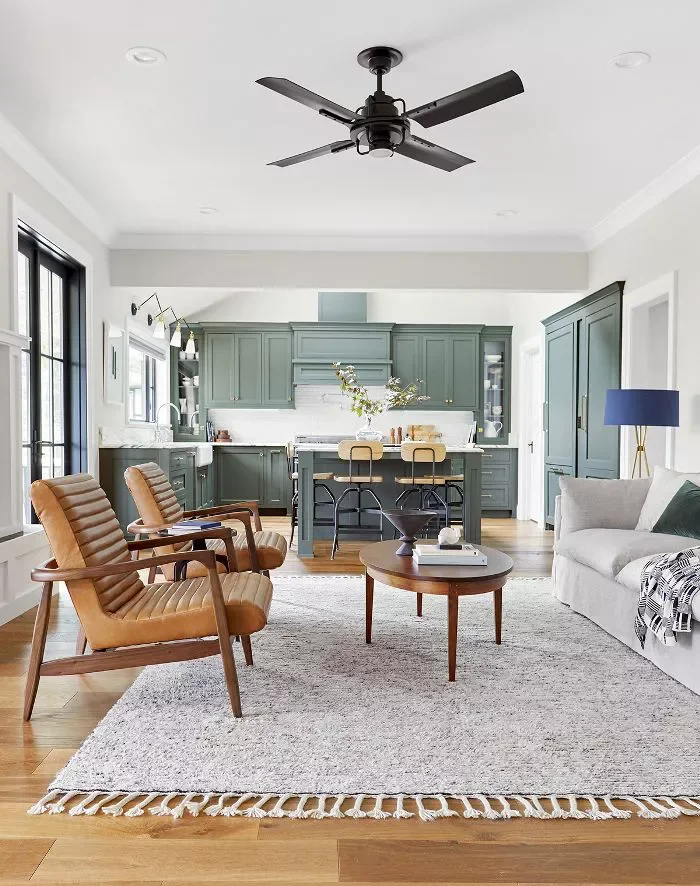
Credit: Emily Henderson Designs/ Photo by Sara Ligorria-Tramp
In your open kitchen and living room combo, position a sofa along one wall and add two accent chairs across from it.
This arrangement gives you plenty of seating options without making the space feel cramped or overcrowded. Your guests will appreciate having different seating choices that still encourage conversation.
10. Choose Circular Dining Tables
[Image could not be processed: https://www.thespruce.com/thmb/vSWD5LoH-2hPToa_8UC3s6evgJw=/1500×0/filters:no_upscale():max_bytes(150000):strip_icc():format(webp)/AshleyMontgomeryDesignopenfloorplanideas2-90e0f02706d54f6ca85f494b1d1ce2d4.png]
A round dining table creates effortless flow in your open kitchen by eliminating sharp corners that people can bump into.
The curved shape also provides a lovely contrast to all the straight lines from your countertops and cabinetry. Plus, round tables naturally encourage conversation and make everyone feel equally included during meals.
11. Position Bookcases as Dividers
Credit: Alvin Wayne Interiors
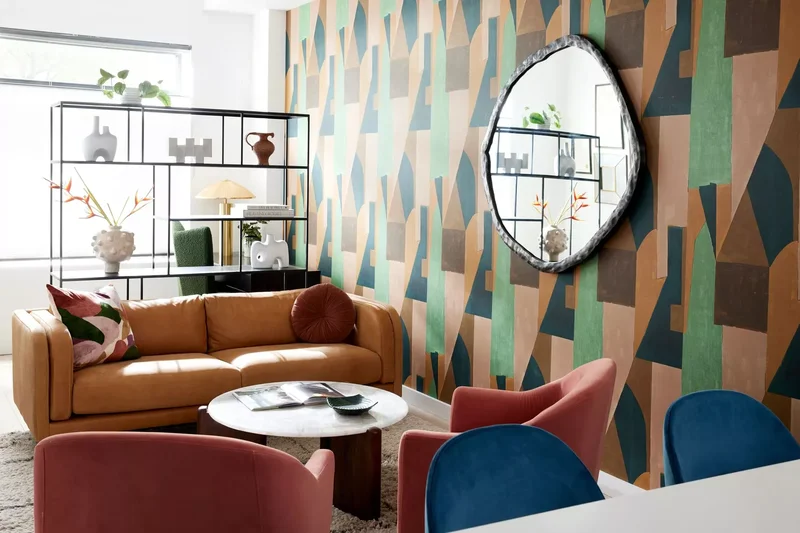
A tall bookcase makes a perfect room divider that separates zones without completely closing them off.
Style the shelves with sculptural objects and favorite books to add visual interest from both sides. This clever trick can even help you tuck a workspace into your living area while keeping it somewhat hidden.
12. Establish an Entry Zone
Credit: Interior Impressions
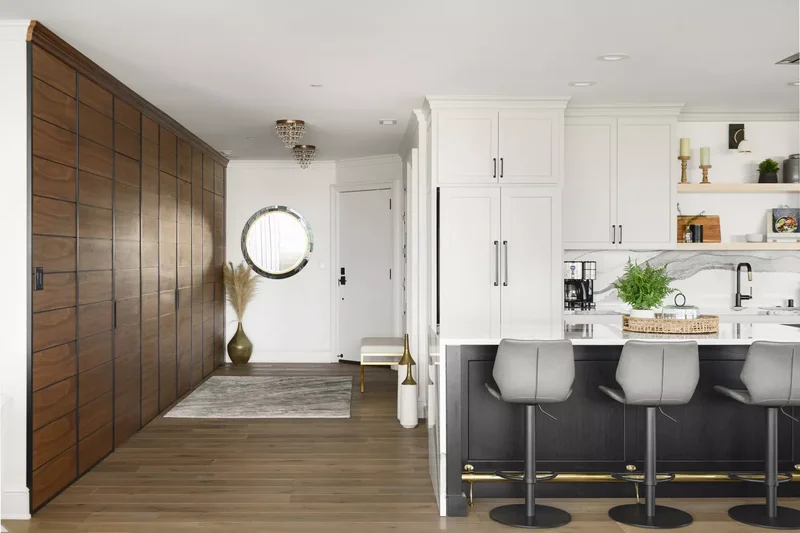
Most open-concept homes lack a formal entryway, but you can easily create the illusion of one.
Layer an area rug near the door, hang a mirror above a small bench, and you’ve instantly established a landing pad. This designated spot gives you somewhere to drop keys and check your appearance before heading out.
13. Blend in Your Workspace
Credit: Kate Marker Interiors
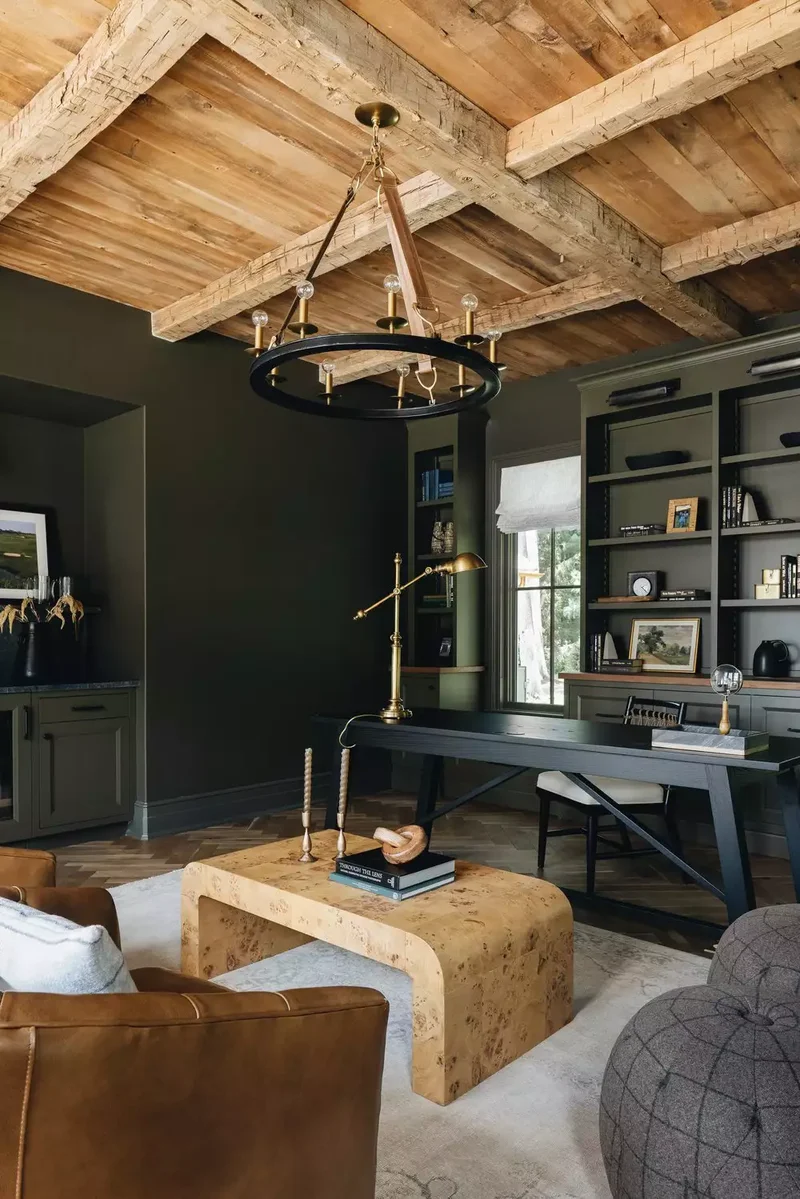
Give your home office a prominent place in your living room instead of trying to hide it away.
Use colors that complement your existing decor so the desk area blends seamlessly into the background. This approach lets you work productively during the day while keeping the space feeling relaxed when you’re off the clock.
14. Experiment With Furniture Arrangement
Credit: Brophy Interiors
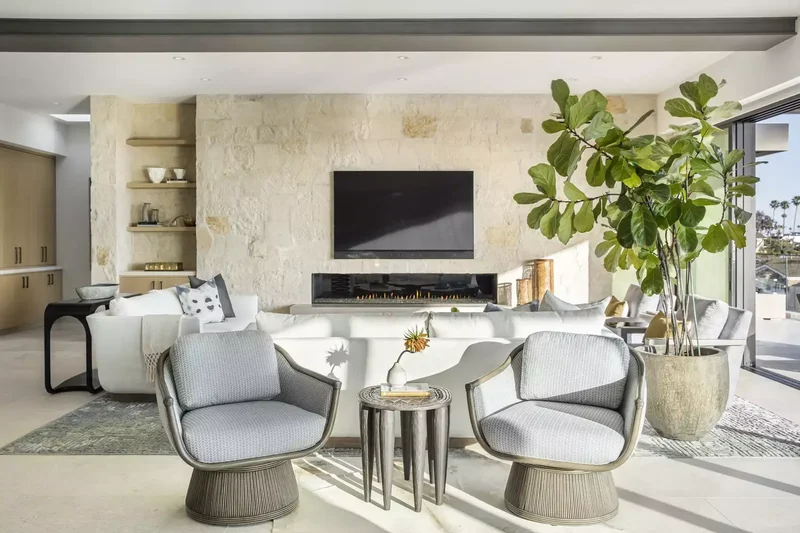
Create distinct areas by positioning a large sofa with its back facing the main room for an instantly cozy vibe.
Then arrange a smaller two-person seating area behind it with chairs facing away from the primary zone. This layered layout gives you multiple functional spaces within one open room.
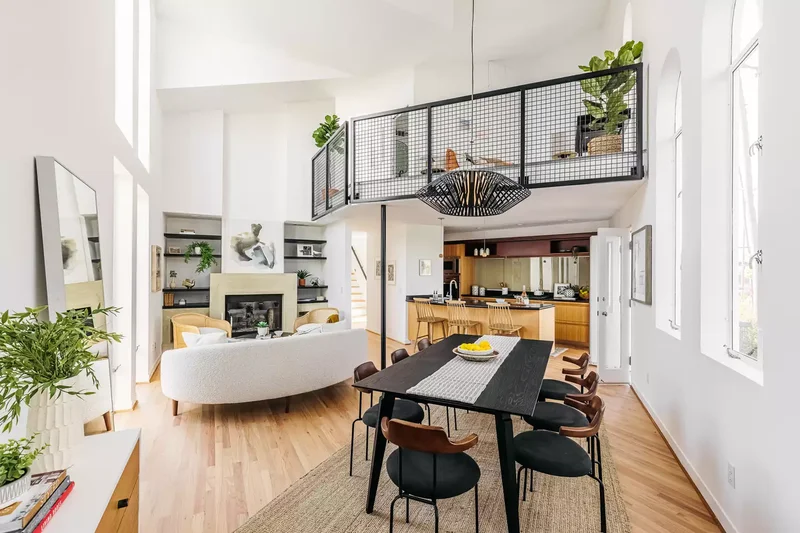
15. Link Levels With Accent Colors
Credit: The Spruce / Christopher Lee Foto
In double-height spaces, black accents throughout help tie everything together beautifully from floor to ceiling.
Carry the dark tone from your mezzanine railing down to dining furniture and living room shelving. This consistent accent color creates cohesion even when you’re working with dramatic vertical space.
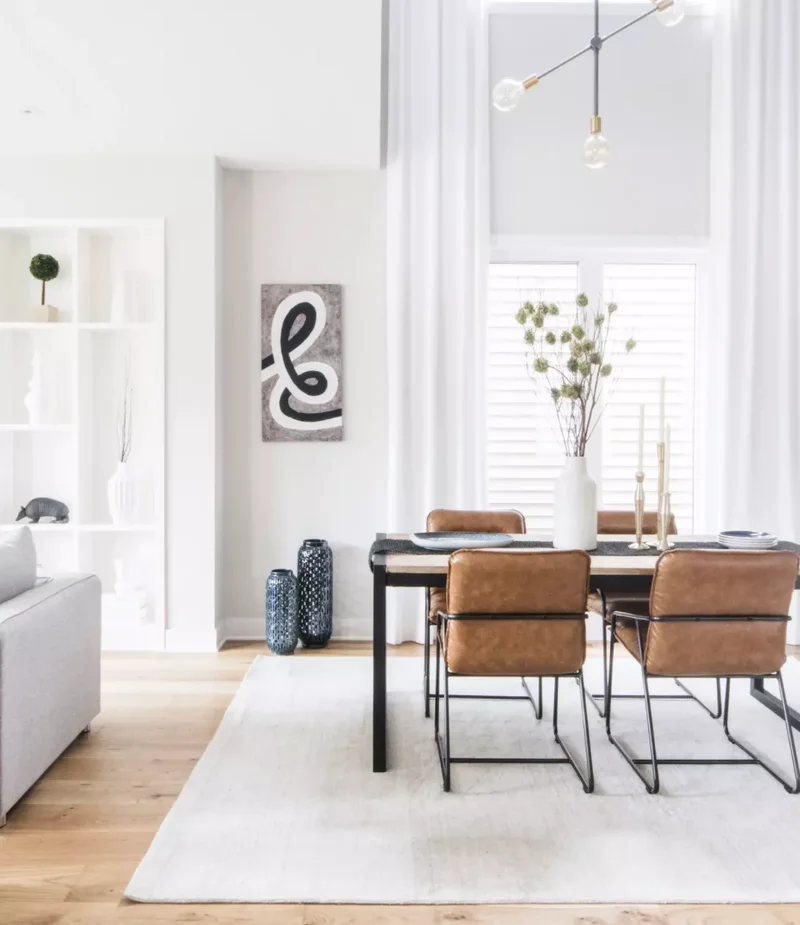
16. Warm Up With Leather Accents
Credit: LeClair Decor
All-white open spaces benefit tremendously from the warmth of cognac or caramel leather dining chairs.
These rich, warm tones provide beautiful contrast against stark white finishes in modern spaces. The leather also adds texture and depth that prevents your room from feeling too sterile or cold.
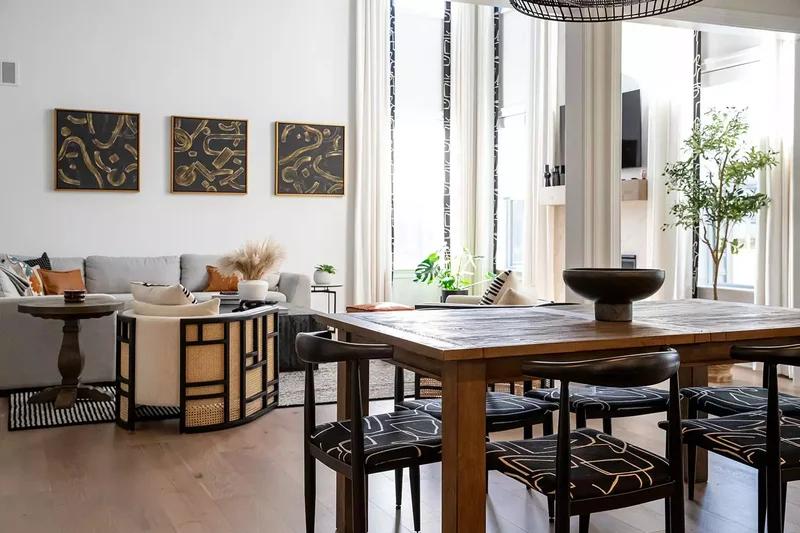
17. Layer Multiple Patterns
Credit: Gray Space Interiors
Don’t shy away from mixing different patterns throughout your open-concept space for added visual interest.
Combine abstract artwork with striped area rugs and graphic throw pillows to create rhythm and movement. This layered approach keeps your eye moving around the room, making the space feel dynamic and collected.
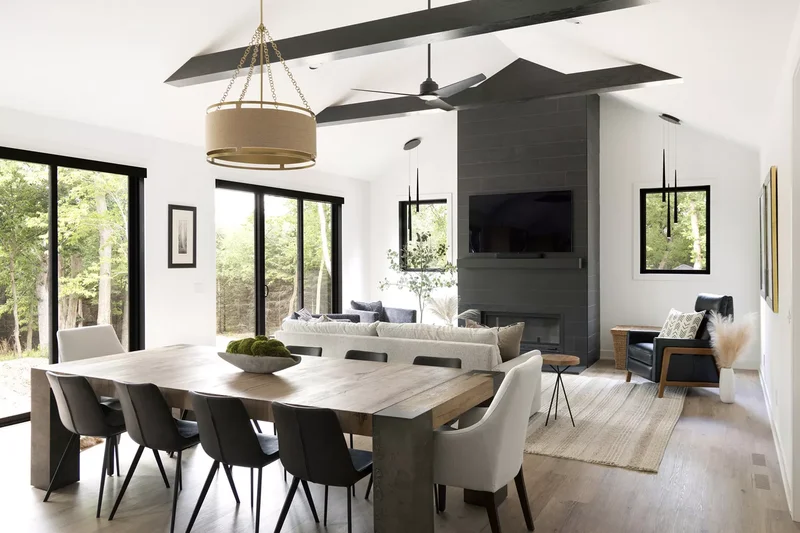
18. Position Entertaining Spaces Together
Credit: Amy Leferink atInterior Impressions
Make hosting gatherings effortless by keeping your living room and dining room right next to each other.
This adjacent arrangement lets guests flow naturally between conversation and dining areas throughout your event. You’ll love how seamlessly you can move from cocktails to dinner without anyone feeling disconnected from the party.
19. Add a Sofa Table Behind Seating
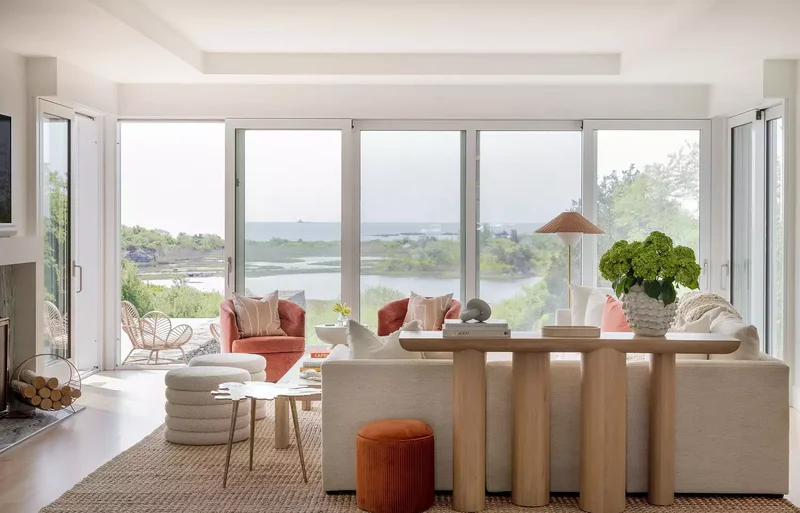
Credit: Desiree Burns Interiors
Place a console table directly behind your sofa to create subtle division in your open living area.
Style it with stacked books, potted plants, or decorative objects to create an attractive vignette from both sides. This functional piece defines your seating zone while giving you valuable surface space for lamps and accessories.
20. Connect Zones With Bold Color
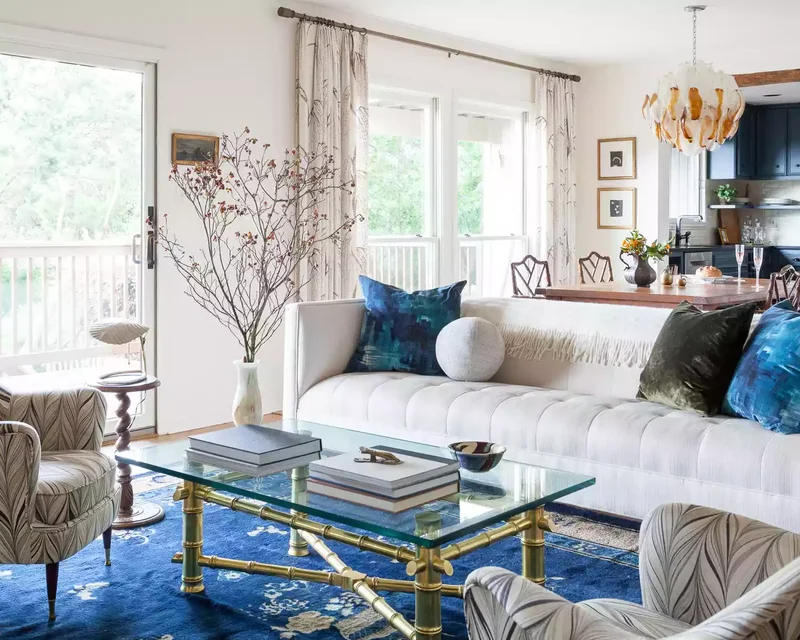
Credit: Erin Williamson Design
A single bold accent color repeated throughout your open space creates instant unity across different zones.
Try using strong blue tones from kitchen cabinets all the way through to living room rugs and pillows. Even when the rest of your palette stays neutral, these pops of color tie everything together beautifully.
21. Distinguish Areas Using Color Blocking

Credit: Maite Granda
Make your dining area stand out within an open kitchen by incorporating a bright, bold color on the island.
A vibrant blue kitchen island with casual bar seating creates clear visual separation from your nearby dining table. This color-blocking technique helps each zone maintain its own identity while staying connected to the whole.
22. Draw Eyes Up to Ceilings
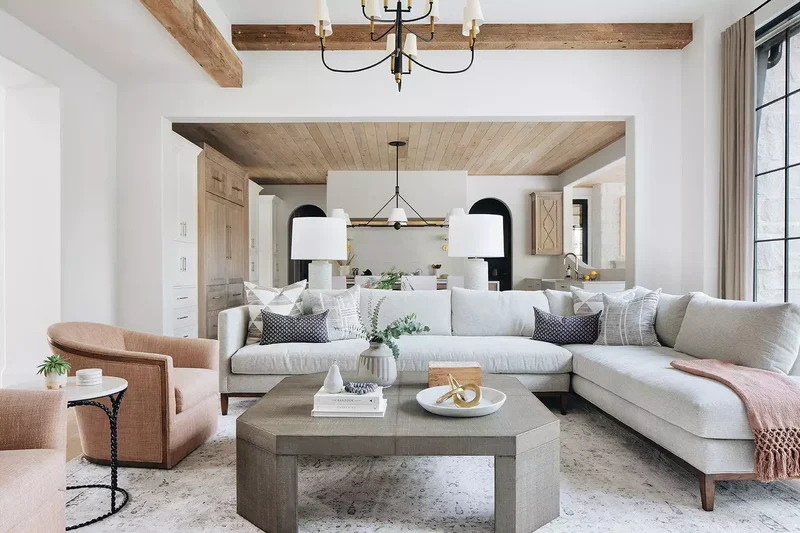
Credit: Kate Marker Interiors
Unite your spacious open layout by using complementary ceiling treatments that relate to each other without being identical.
Try wooden planks in your kitchen and dining areas, then switch to decorative wood beams in the living space. This approach creates visual interest overhead while maintaining cohesion throughout your entire floor plan.
23. Create Multiple Conversation Areas

Credit: Becca Interiors
Maximize your open-concept space by setting up several distinct seating areas instead of just one large grouping.
This arrangement lets different activities happen simultaneously without anyone feeling cramped or in the way. Multiple zones also make your space feel larger and more versatile for different occasions.
24. Define Zones With Side Tables

Credit: LeeAnn Baker Interiors
Strategic placement of side tables naturally defines your seating area while adding essential functionality.
These practical pieces give you spots for drinks, books, and table lamps while creating visual boundaries. Side tables anchor your furniture groupings and make each zone feel complete and intentional.
25. Incorporate a Recreation Zone
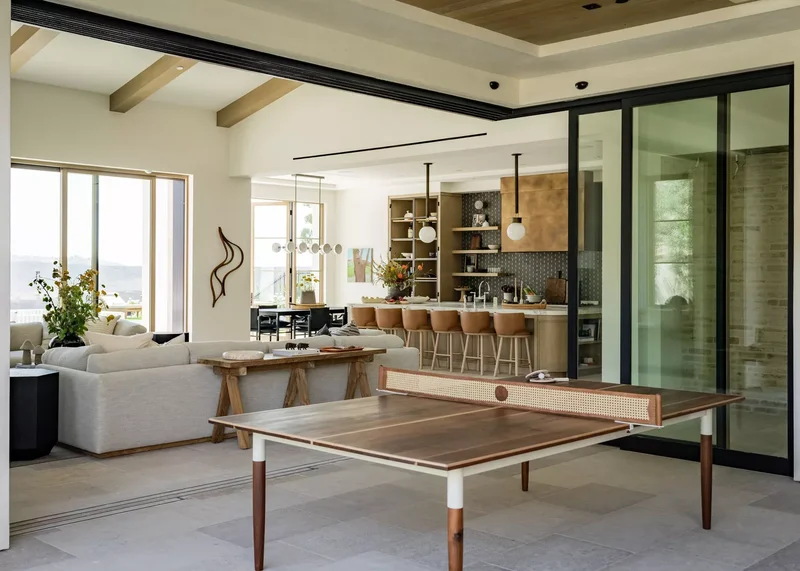
Credit: Brophy Interiors
Float a stylish pool table or ping pong table in your large open kitchen and living area for instant entertainment.
Choose a beautiful table that complements your decor rather than clashing with it for an intentional, designed look. This fun addition puts your game room right in the heart of the action where everyone can enjoy it.
26. Install Custom Built-Ins
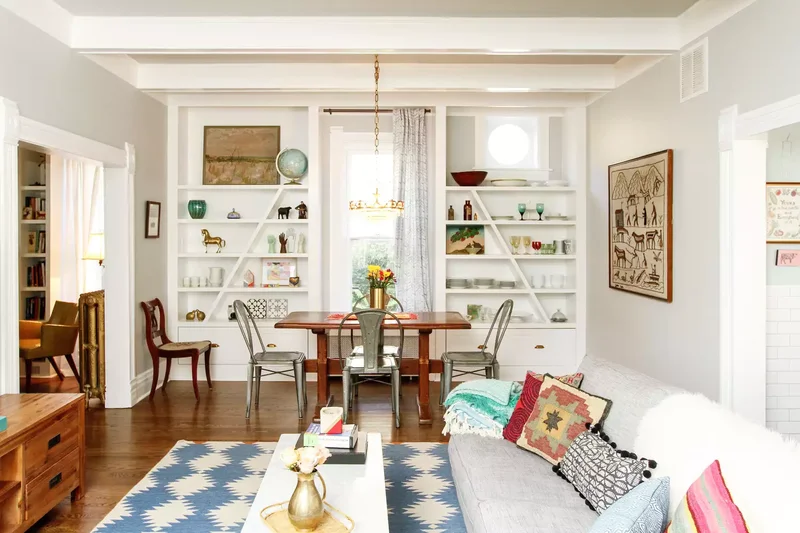
Credit: The Spruce / Ashley Poskin
Built-in shelving creates a stunning focal point while adding valuable storage to your open-plan room.
Customize your built-ins to fit your specific needs, whether that’s a TV wall, fireplace surround, or floor-to-ceiling bookcases. These permanent features give your space architectural interest and help ground your furniture arrangements.
27. Establish a Cohesive Color Story
[Image could not be processed: https://www.thespruce.com/thmb/sX0Y6WHykLuQ1ckZZkuxMhInnRs=/1500×0/filters:no_upscale():max_bytes(150000):strip_icc():format(webp)/studioktopenfloorplanideas-b7b0fda318204e97aaf2c053447ff1e2.jpeg]
Stick with a consistent color palette throughout your open space to create a pulled-together, designer look.
Classic combinations like black, white, and gray work beautifully with any decorating style you prefer. This cohesive approach prevents your space from feeling chaotic or disjointed despite having multiple functional zones.
28. Coordinate Lighting Throughout
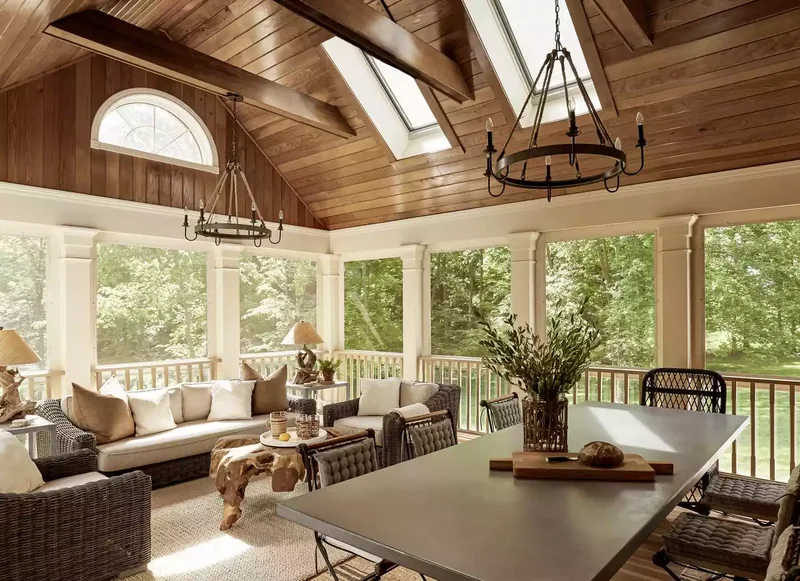
Credit: Becca Interiors
Matching or coordinating light fixtures create unity across your large multi-functional space beautifully.
Try using the same style farmhouse chandeliers to highlight different ceiling areas in your room. This repetition ties everything together while providing practical illumination exactly where you need it most.
29. Anchor Each Area With Rugs
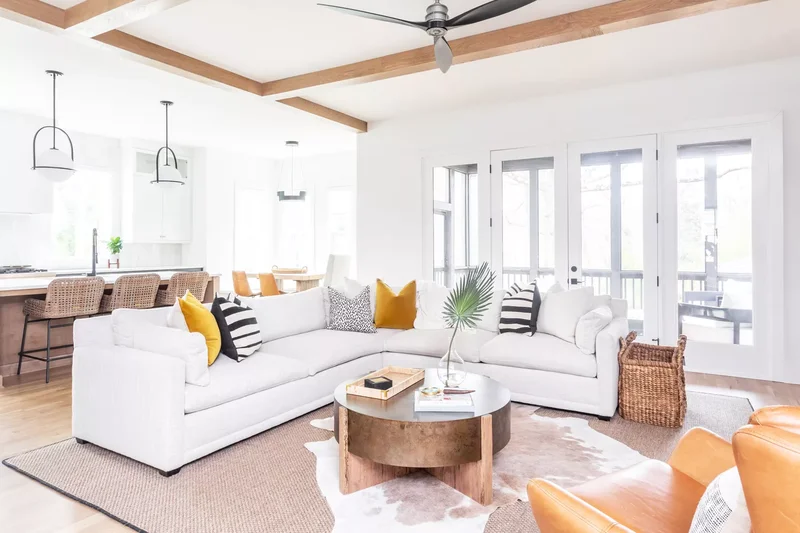
Credit: Morse Design
Area rugs are your secret weapon for defining individual zones within an open-concept layout.
Choose generously sized rugs to anchor your seating area and dining table separately. The rugs create visual boundaries that help each space feel distinct while keeping the overall flow intact.
30. Use Lighting to Mark Zones

Credit: Desiree Burns Interiors
Strategic lighting placement helps define your dining area within a larger open space without needing walls.
A pair of organic pendant lights hanging over your dining table creates a clear focal point. This technique works especially well in Japandi-style rooms where simplicity and intentionality matter most.
31. Style a Bar Cart
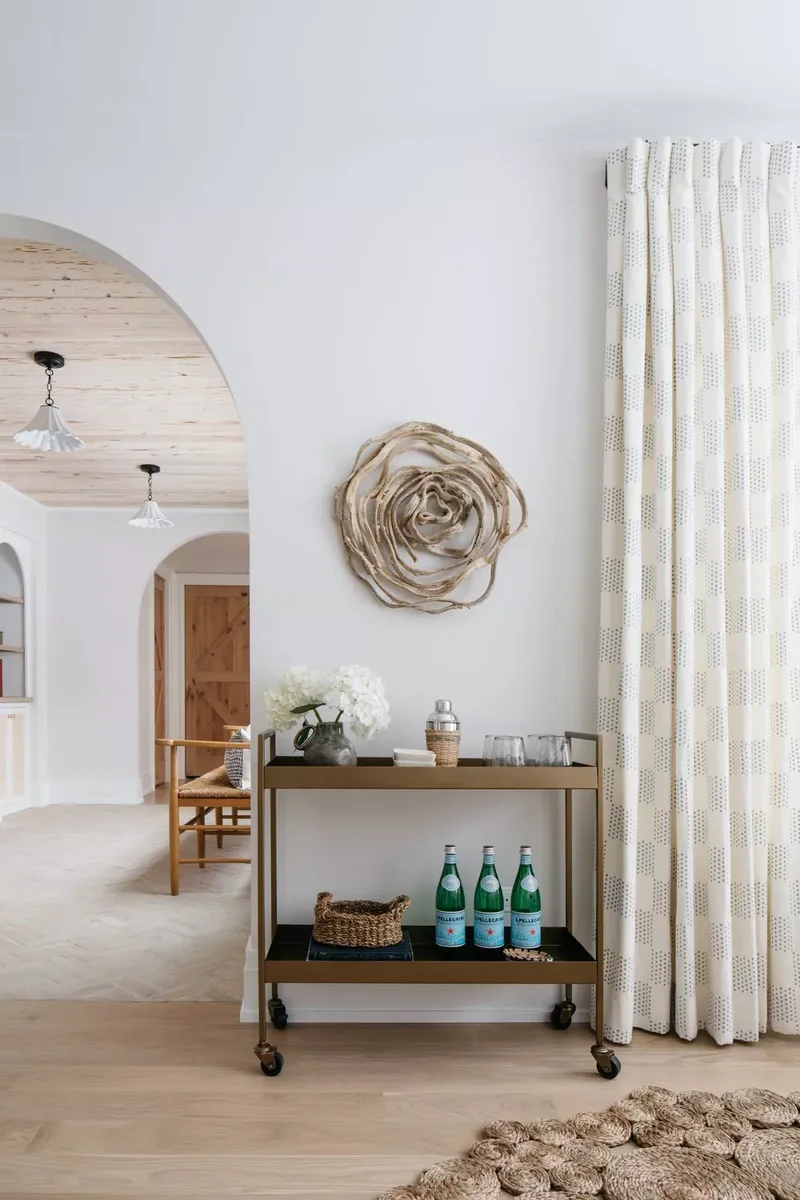
Credit: Kate Marker Interiors
Fill empty wall space in your open floor plan with a thoughtfully styled bar cart that serves multiple purposes.
Use it as a functional home bar for entertaining, or style it with plants and decorative objects. Bar carts add personality while being easy to move around whenever you need to reconfigure your space.
32. Add Built-In Banquette Seating
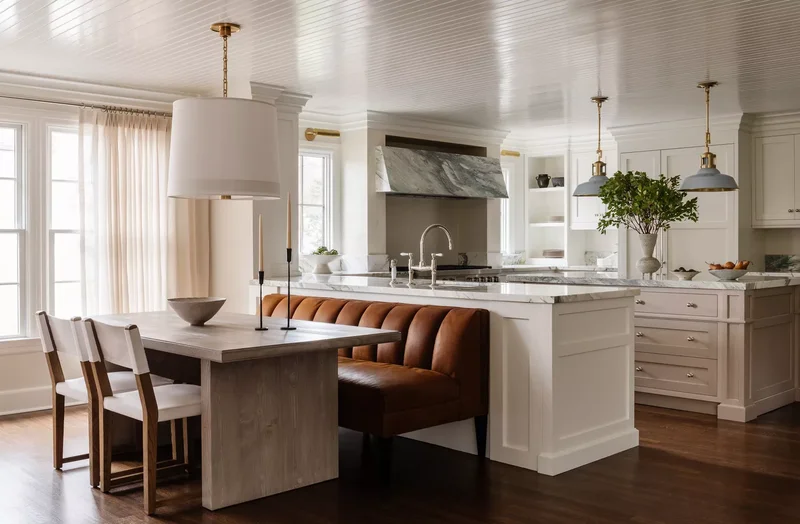
Credit: JK Interior Living
Banquette seating brings cozy, inviting vibes to your open eat-in kitchen that bar stools just can’t match.
Push a long upholstered banquette against your peninsula to create comfortable dining that anchors the space. This built-in look adds architectural interest while maximizing seating in a relatively compact footprint.
33. Arrange a Large Sectional
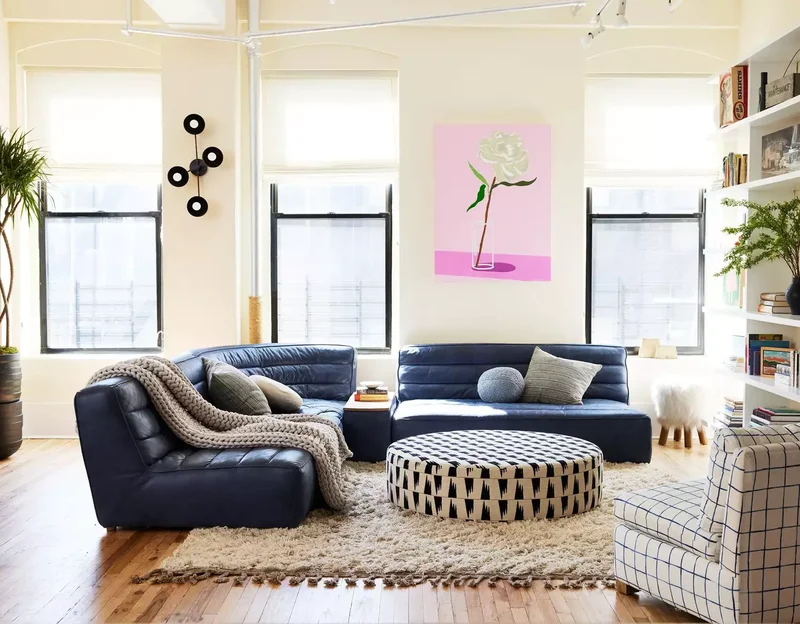
Credit: Alvin Wayne Interiors
A generous sectional or modular sofa creates a cozy conversation area in your open-plan space effortlessly.
Float the furniture away from walls to establish seamless separation between zones. The sectional’s substantial size naturally defines your living area without needing any additional room dividers.
34. Echo Materials and Textures

Credit: Desiree Burns Interiors
Repeating similar materials throughout your open room creates a balanced, intentional feeling that ties everything together.
Try plush upholstery on both dining and living room seating, then add a textural area rug. These repeated elements make your decorating scheme feel cohesive and thoughtfully planned rather than random.
35. Bring in Flexible Seating Options
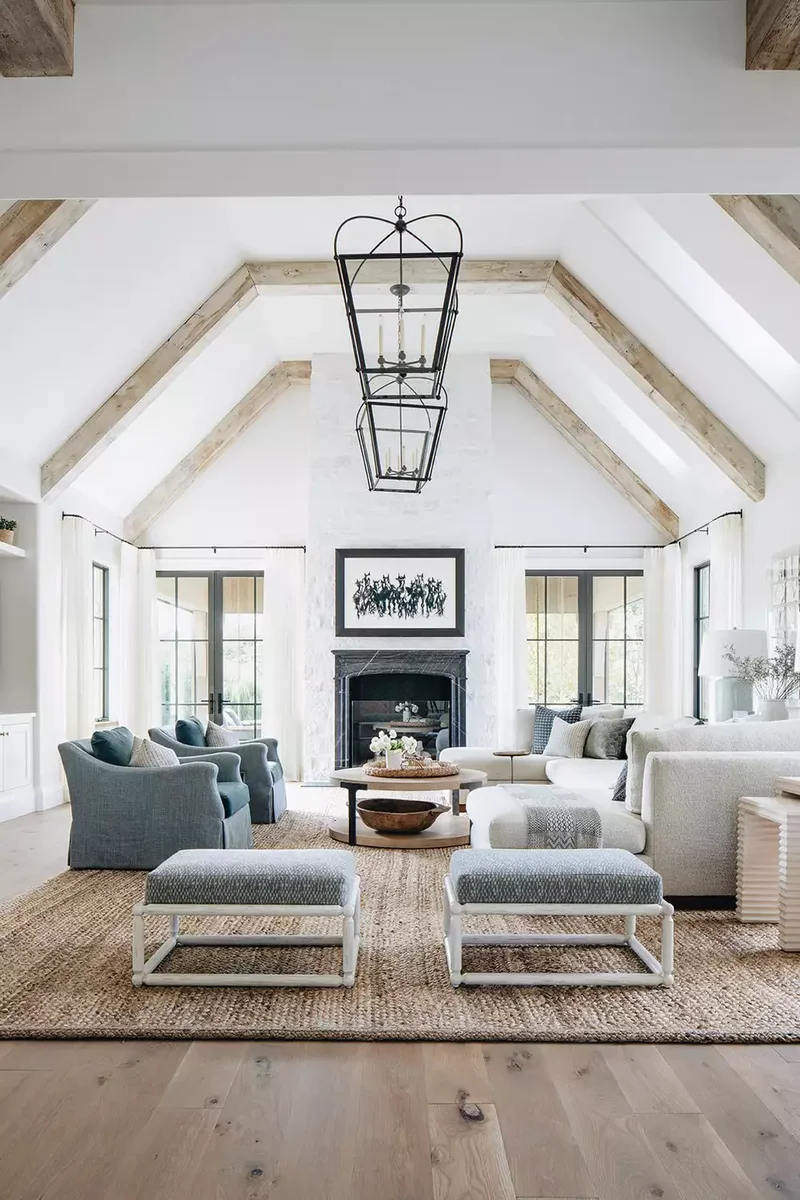
Credit: Kate Marker Interiors
Ottomans, poufs, and beanbag chairs provide extra seating while helping define the edges of your conversation areas.
The best part is that you can easily move these pieces around depending on what you need. This flexibility makes your open space more adaptable for everything from quiet evenings to big gatherings.
Final Thoughts
Open floor plans give you incredible freedom to design spaces that truly work for how you live.
The key is creating distinct zones while maintaining that beautiful flow that makes open concepts so appealing in the first place.
With these designer-approved ideas, you’ll transform your open space into a home that feels organized, intentional, and absolutely perfect for your lifestyle. Start with one or two techniques that speak to you, and watch your space come together beautifully.
