
You’re going to love how transitional style brings the best of both worlds into your living room.
This design approach beautifully blends modern simplicity with traditional warmth, creating spaces that feel both timeless and fresh.
Whether you’re starting from scratch or updating your current space, these 25 ideas will show you exactly how to achieve that perfect balance between classic elegance and contemporary comfort.
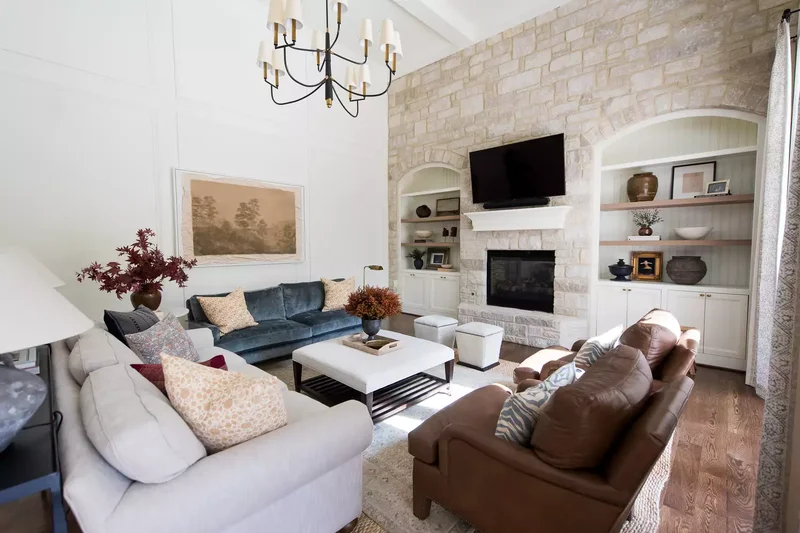
01. Install Arched Built-In Shelving
Credit: Whittney Parkinson Design
You’ll create instant character in your living room by adding arched built-ins flanking your fireplace.
White painted wood units bring a homey, traditional feel while keeping things light and airy. These architectural elements provide beautiful storage and display space while anchoring your entire room design with timeless appeal.
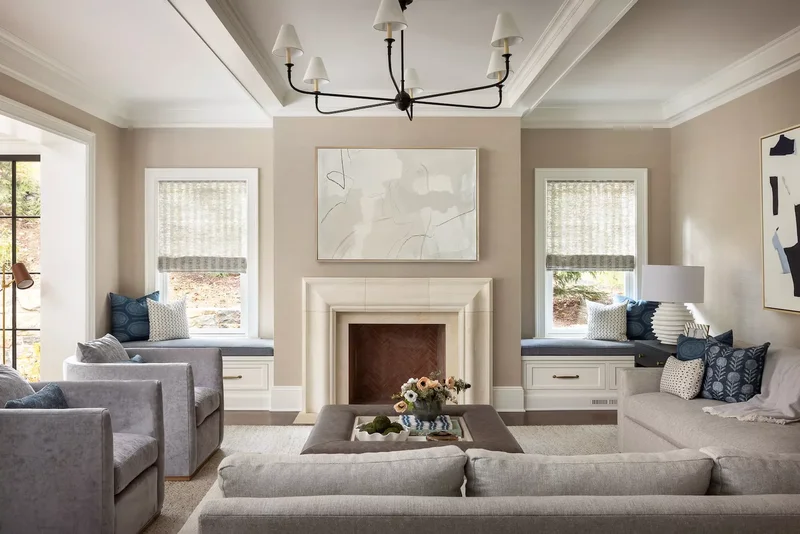
02. Warm Things Up With Beige Tones
Credit: Britt Design Studio
Transform your living room into a cozy retreat by painting your walls a warm beige shade.
You can layer this welcoming neutral with crisp white trim and deep blue accents for visual interest. This color combination creates a perfectly balanced foundation that feels inviting without overwhelming your senses or limiting your decorating options.
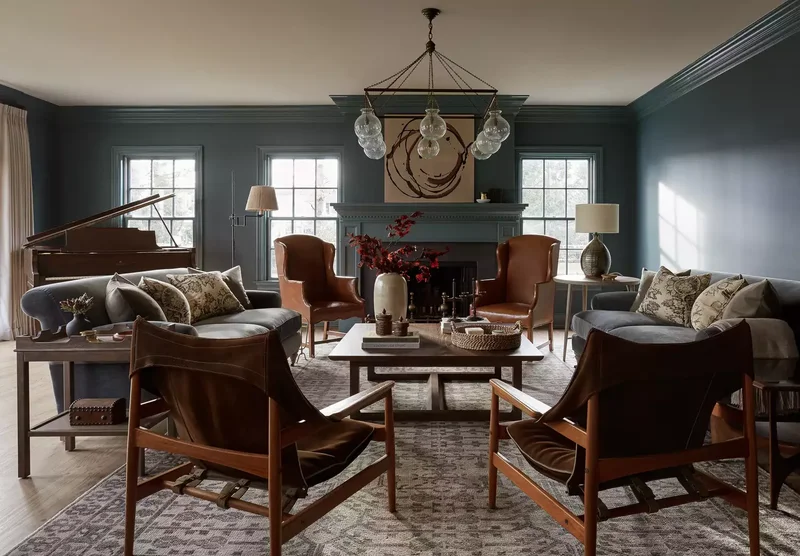
03. Embrace Darker, Moodier Colors
Credit: Becca Interiors
Don’t feel limited to light neutrals when designing your transitional space.
You can absolutely use deeper, more saturated colors like smoky blue on your walls for drama. Pair these moodier tones with velvet sofas, rich brown woods, and leather accents to create a sophisticated atmosphere that still feels balanced and inviting.
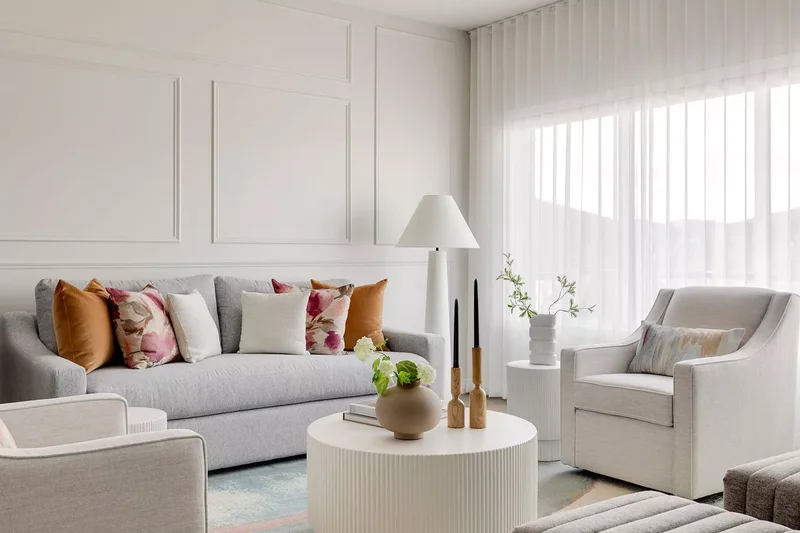
04. Create Dimension With White-on-White
Credit: Louis Duncan-He Designs
You’ll add beautiful architectural interest by installing wood trim painted the same white as your walls.
This monochromatic approach creates subtle dimension without requiring major renovations. Keep your furniture simple and comfortable, then add personality through colorful accent pillows and area rugs for a light, airy feel that’s anything but boring.
05. Keep Color Accents Harmonious
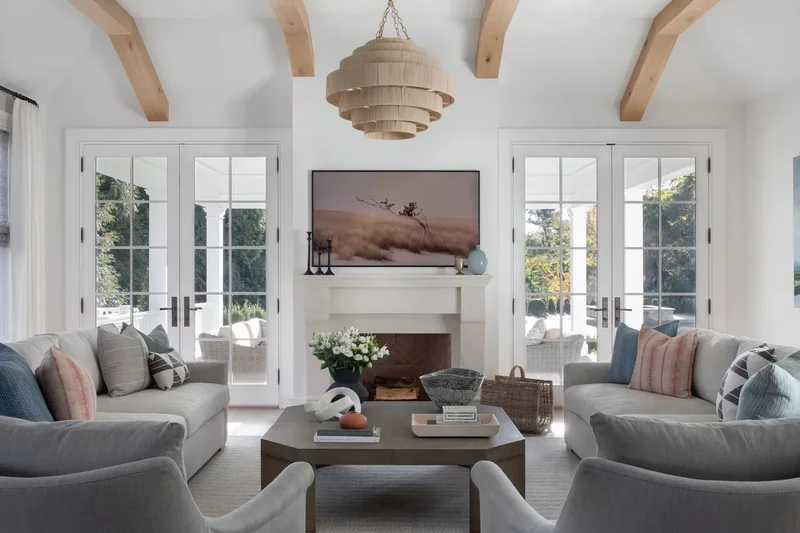
Credit: Britt Design Studio
Your transitional living room will feel more serene when you coordinate your color accents carefully.
Stick to a limited palette of complementary shades like dusty pink and soft blue throughout your throw pillows and decorative objects. This thoughtful approach creates visual harmony that’s easy on the eyes while still adding personality to your space.
06. Select Cool Gray Neutrals
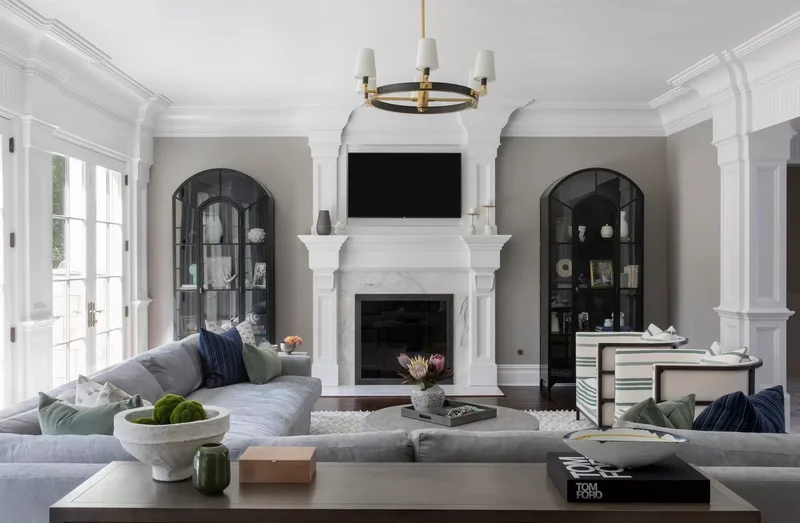
Credit: Britt Design Studio
You can create a sophisticated foundation by pairing cool gray walls with decorative white trim.
This classic combination works beautifully in formal living rooms where you want elegance without stuffiness. Consider adding arched display cases instead of traditional built-ins for an unexpected twist that maintains that perfect transitional balance between old and new.
07. Display Subtle Landscape Art
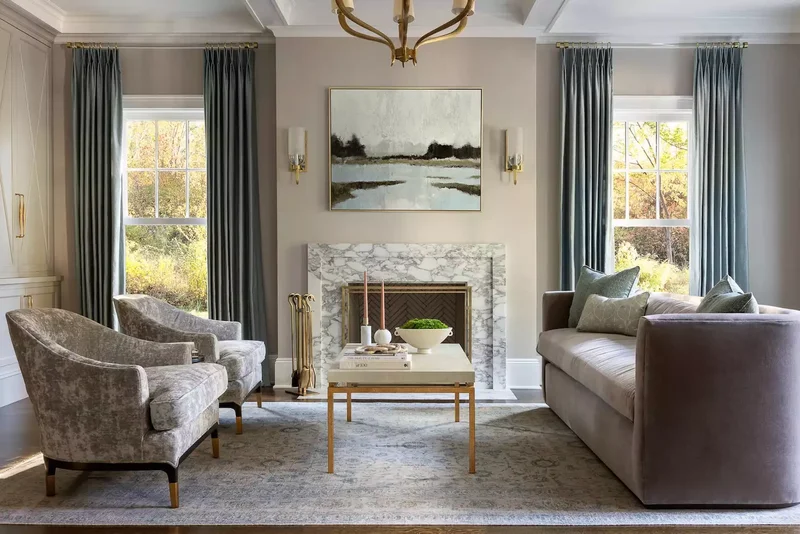
Credit: Britt Design Studio
Your artwork choices should complement rather than compete with your transitional design scheme.
Look for understated landscape paintings featuring muted shades that blend seamlessly with your neutral palette. These subtle art pieces add just enough color and visual interest while maintaining the calm, sophisticated atmosphere you’re working to create throughout your space.
08. Ground Your Space With Jute
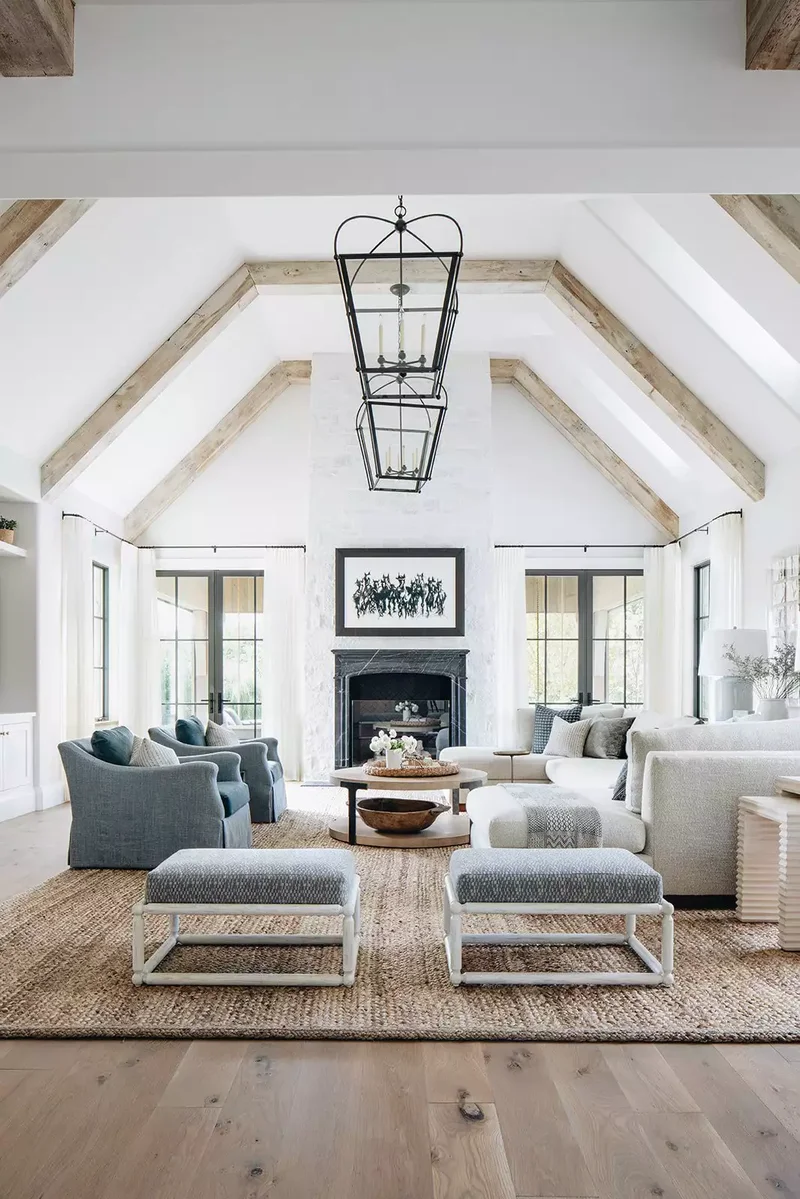
Credit: Kate Marker Interiors
You’ll love how an affordable jute area rug perfectly bridges traditional and modern aesthetics.
This natural material adds warmth and texture while complementing both wooden elements and soft upholstery. A large jute rug anchors your seating area beautifully, creating visual cohesion that ties your entire color scheme together without breaking your budget.
09. Incorporate Coastal Design Elements
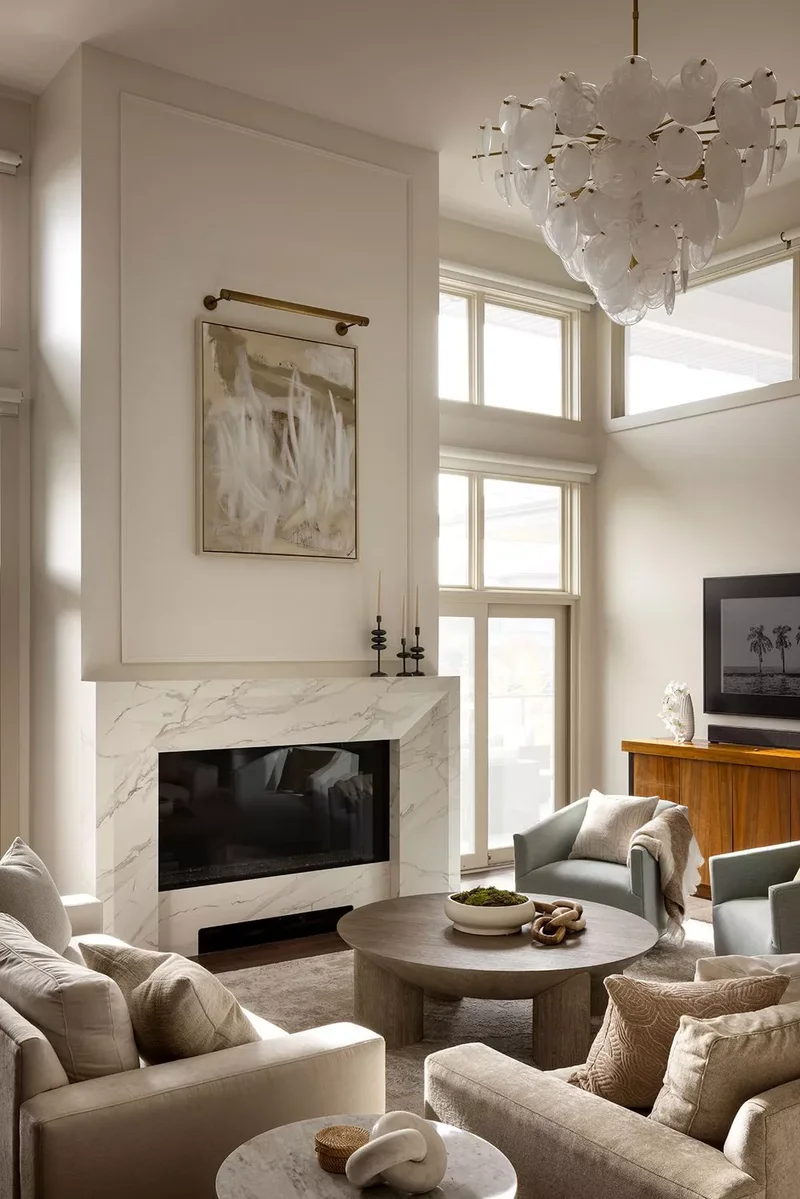
Credit: Louis Duncan-He Designs
Personalize your transitional living room by weaving in subtle coastal touches that reflect your style.
You can mix beach-themed artwork with modern architectural elements and soft blue-and-sand color palettes. This approach adds character and warmth to new construction spaces that might otherwise feel too sterile or impersonal right after completion.
10. Simplify Your Fireplace Design
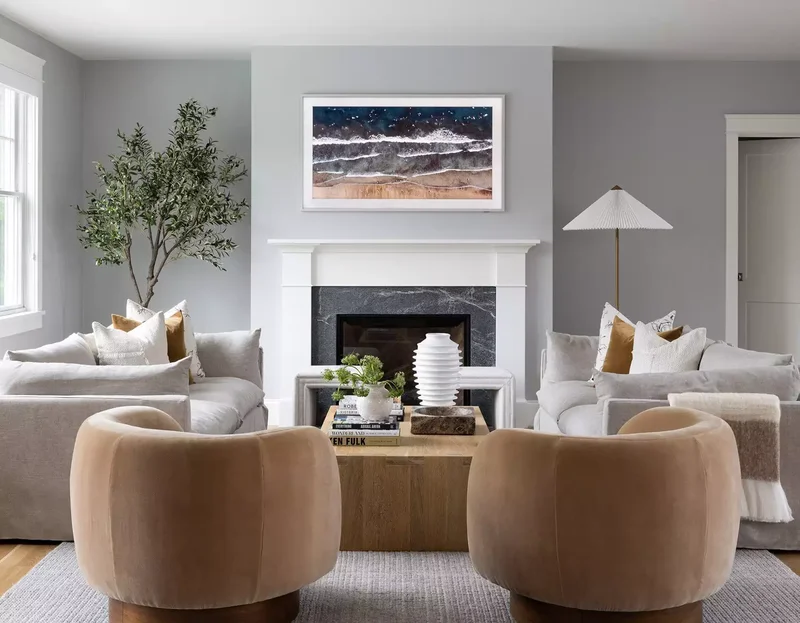
Credit: Desiree Burns Interiors
Create a cozy focal point with a streamlined fireplace that nods to tradition without feeling heavy.
You’ll appreciate how a shallow mantel left bare maintains an uncluttered, modern feel. Pair your simplified fireplace with a soft coastal palette of whites, light grays, and sandy tones for a space that feels both welcoming and refreshingly clean.
11. Enhance With Architectural Features
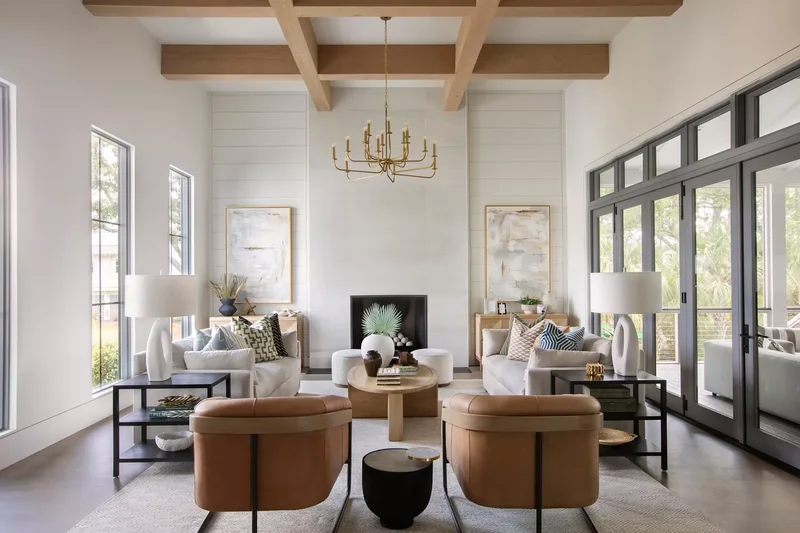
Credit: Margaret Wright Interior & Lifestyle Photographer
You can add instant character to bland spaces by incorporating architectural details during your renovation.
Consider mixing a shiplap accent wall with warm wood ceiling beams for dimensional interest. These decorative touches reference traditional design elements while maintaining a modern sensibility, creating that cozy transitional feel you’re after without overwhelming your space.
12. Add Color Through Soft Furnishings
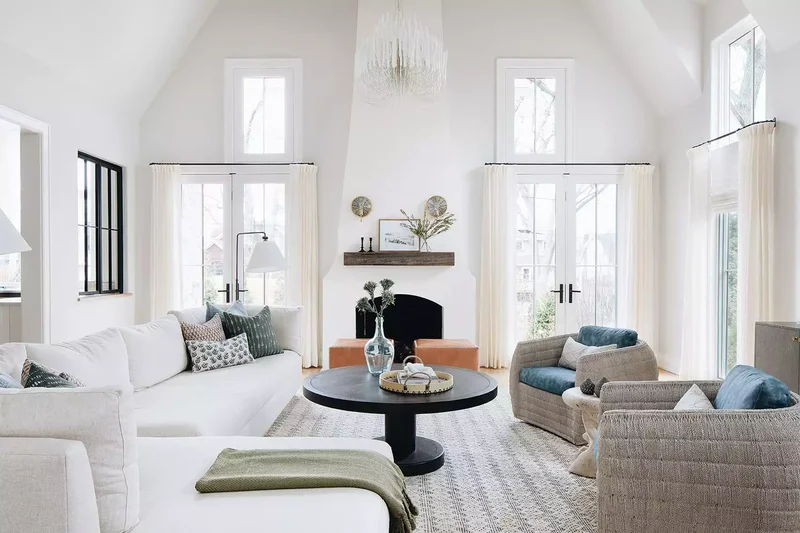
Credit: Kate Marker Interiors
Transform your neutral living room by introducing carefully chosen pops of color through textiles.
You’ll find that blue and cognac leather accents work beautifully to ground light, airy spaces. Use throw pillows, upholstered furniture, or floor poufs as your color vehicles, keeping the overall palette restrained for that signature transitional sophistication and balance.
13. Install Floor-to-Ceiling Drapery
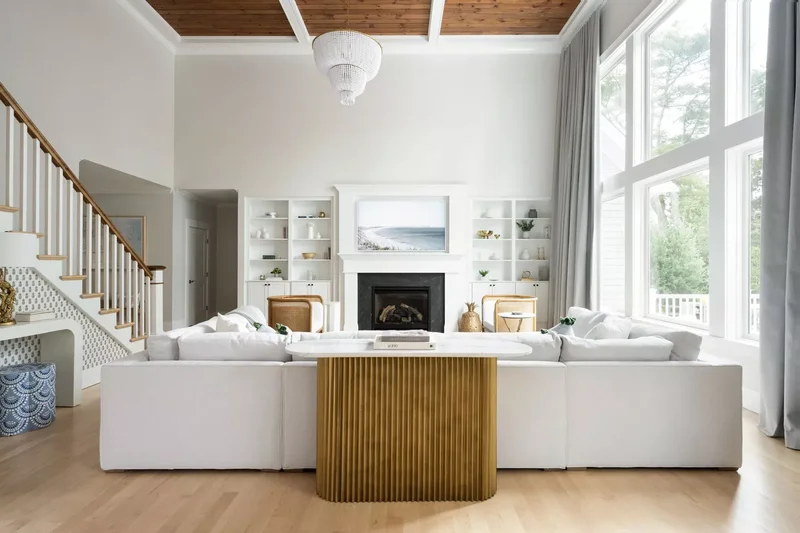
Credit: Desiree Burns Interiors
Maximize the impact of your large windows by hanging curtains that extend from ceiling to floor.
You’ll soften architectural lines while making your room feel taller and more luxurious. Choose neutral window treatments in soft grays or beiges that filter natural light beautifully without blocking it completely, creating an elegant frame for your views.
14. Layer Rugs for Added Texture
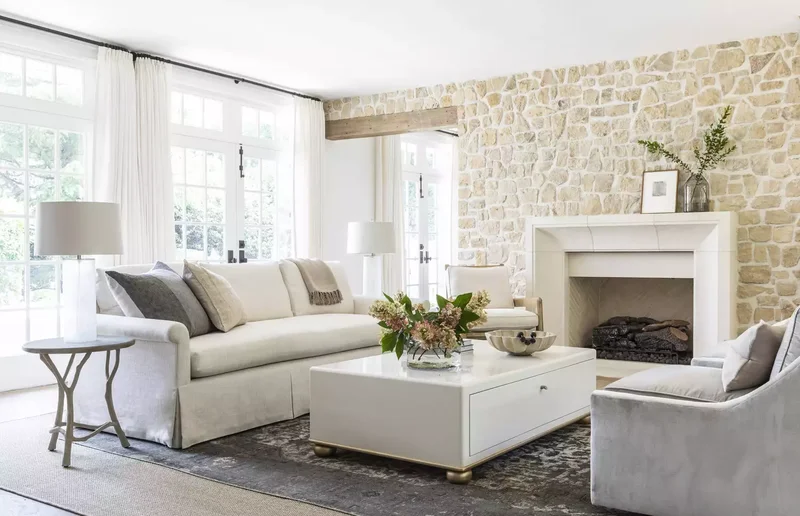
Credit: Design byMarie Flanigan Interiors/ Photo byJulie Soefer
You’ll create wonderful visual depth by layering a smaller patterned rug over a larger solid one.
This designer trick adds texture and interest to your transitional living room without overwhelming the space. Choose neutral tones for both rugs so they complement each other seamlessly while defining your seating area with style and sophistication that feels collected.
15. Make a Statement With Lighting
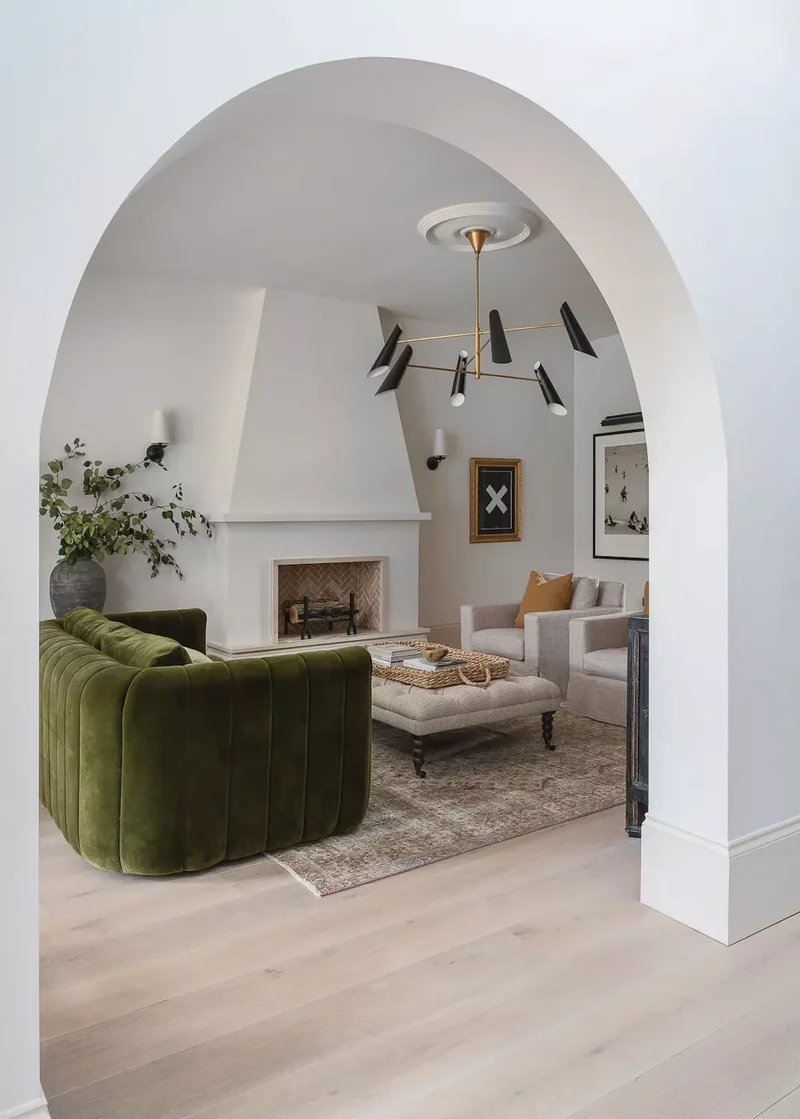
Credit: House 9 Interiors
Your lighting fixtures should do double duty as both functional illumination and striking decor pieces.
Don’t hesitate to choose either modern or vintage statement lighting based on your personal preferences. A bold chandelier or unique pendant can become the jewelry of your room, adding personality while maintaining that balanced transitional aesthetic you’re creating.
16. Feature a Large Antique Mirror
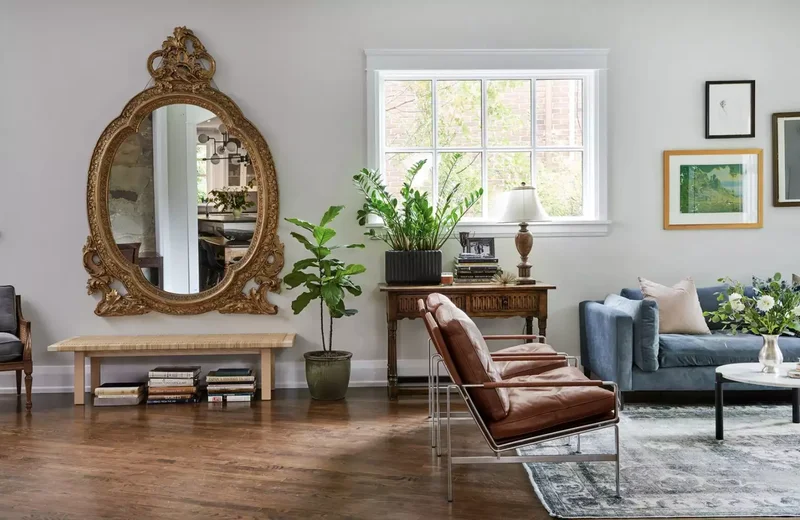
Credit: Ashley Montgomery Design
Create an impressive focal point in rooms without fireplaces by hanging a large antique mirror.
You’ll add instant character and visual interest while making your space feel larger and brighter. This hero piece works beautifully when you’re mixing antique and modern furniture, creating that warm, inviting transitional feel that never goes out of style.
17. Modernize Classic Furniture Styles
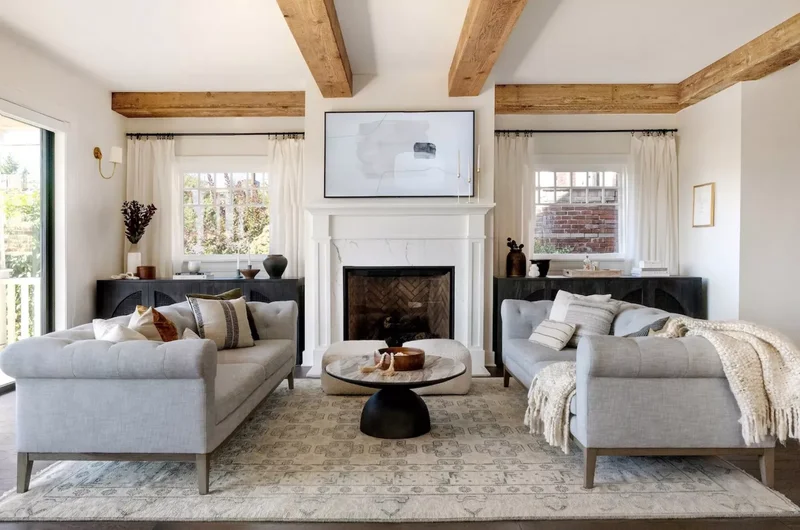
Credit: Jessica Nelson Design/Carina Skrobecki Photography
You can honor traditional design while embracing modern comfort by choosing updated classic furniture forms.
Look for pieces like oversized Chesterfield sofas upholstered in neutral fabrics and set on slender legs. These contemporary takes on timeless silhouettes give you the best of both worlds—recognizable classic style with the comfort and proportions that work for today’s living.
18. Style Your Formal Living Area
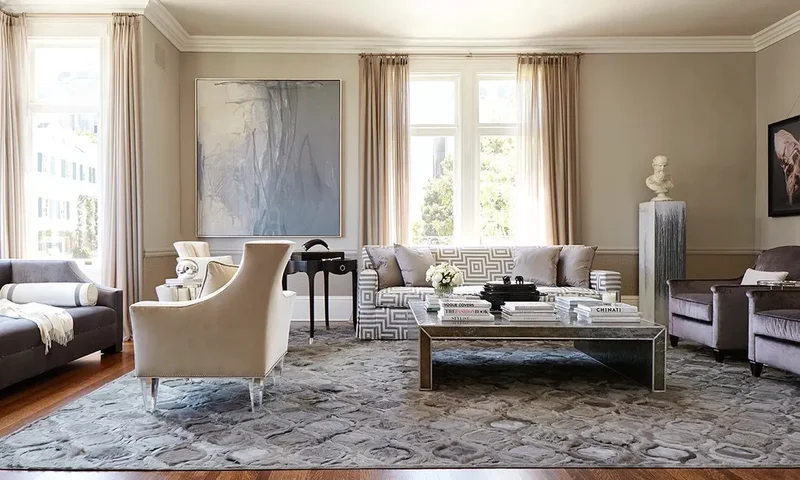
Credit: Kendall Wilkinson Design
Give your formal living room a transitional makeover that feels timeless rather than stuffy or outdated.
You’ll achieve this by mixing furniture with classic lines, fresh neutral upholstery, and modern artwork. This balanced approach creates a space that’s elegant enough for entertaining yet comfortable enough for everyday relaxation with your family and friends.
19. Layer Multiple Textures Together
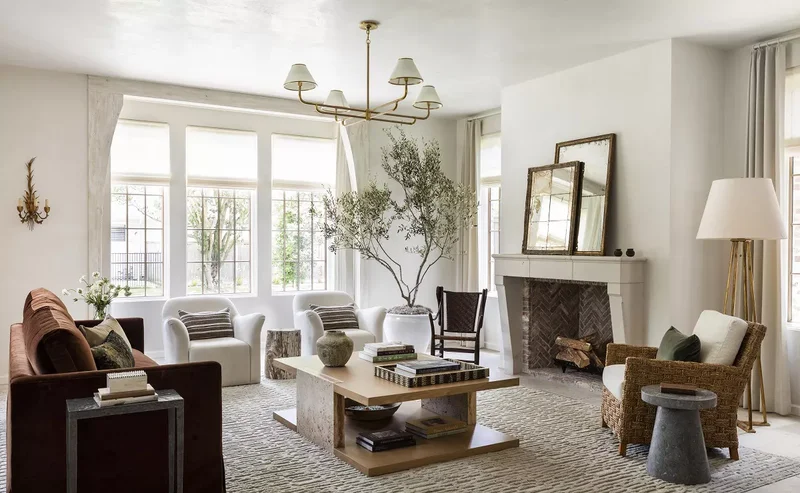
Credit: Design byMarie Flanigan Interiors/ Photo by Julie Soefer
Keep your neutral transitional space from feeling flat by mixing diverse textures and materials throughout.
You can combine velvet upholstery with stone surfaces, natural wood, woven rattan, and dimensional rugs. This layering approach adds visual and tactile interest that makes your understated color palette feel rich, sophisticated, and thoughtfully designed rather than boring or one-dimensional.
20. Maintain Flow Throughout Your Home
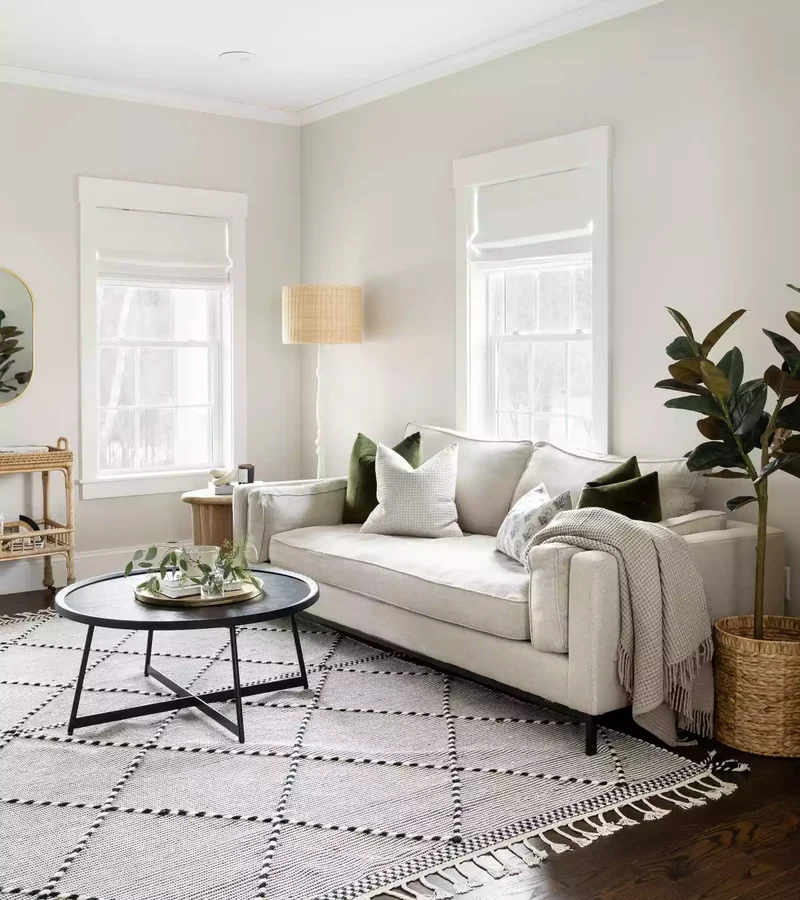
Credit: Desiree Burns Interiors
Your transitional living room should connect seamlessly with adjacent spaces for a cohesive whole-home feel.
You’ll achieve this by carrying your mix of classic and modern elements throughout your entire floor plan. Use consistent neutral tones and repeated design motifs to create visual continuity that makes your home feel intentionally designed and professionally pulled together.
21. Incorporate Gentle Curved Lines
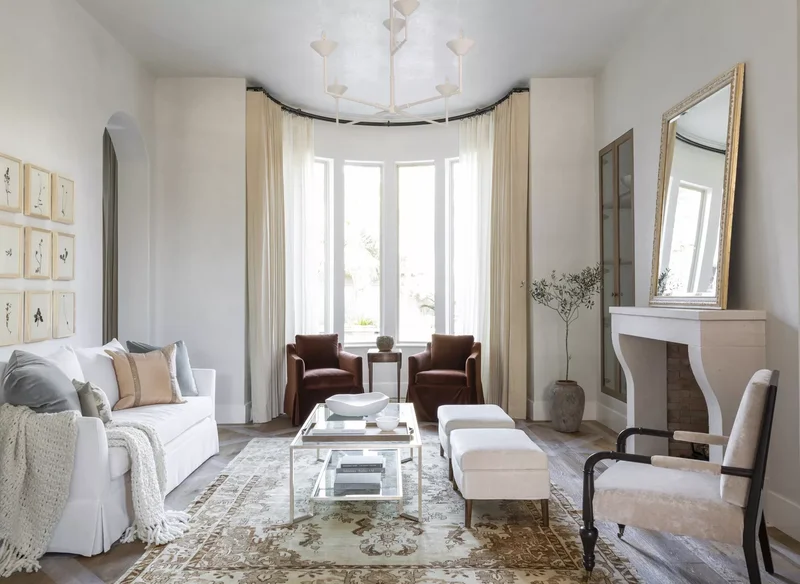
Credit: Design byMarie Flanigan Interiors/ Photo by Julie Soefer
You’ll create a sophisticated, flowing feel by embracing subtle curves in your furniture and architectural elements.
Look for seating with gentle rounded arms, curved fireplace surrounds, and bow windows that soften angular spaces. Transitional sofas feature comfortable proportions with soft curves that recall classic styles while maintaining neutral tones and timeless appeal that works for years.
22. Blend Antiques With Modern Pieces
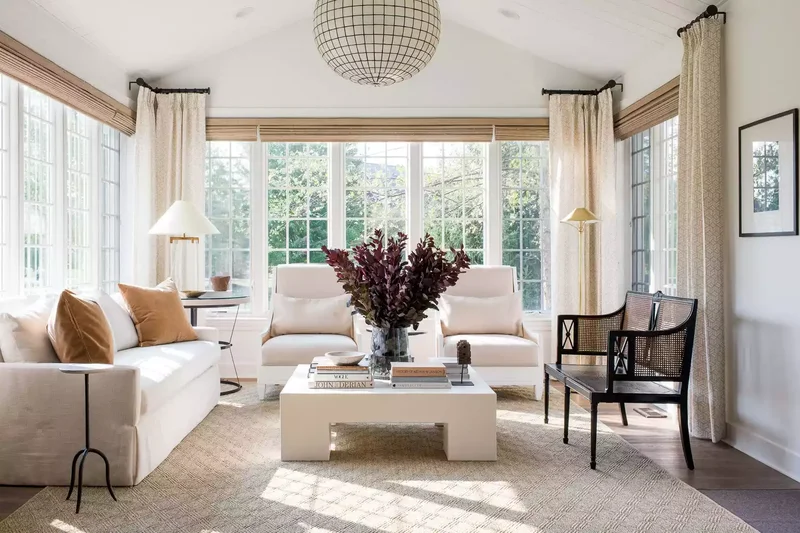
Credit: Whittney Parkinson Design
Mixing furniture from different periods is what transitional style is all about, so embrace this approach confidently.
You can successfully blend old and new by maintaining low contrast throughout your space. Unite traditional furniture forms with modern upholstery fabrics and soft neutral color palettes for a collected look that feels unified rather than disjointed or confusing.
23. Update Traditional Architecture Thoughtfully
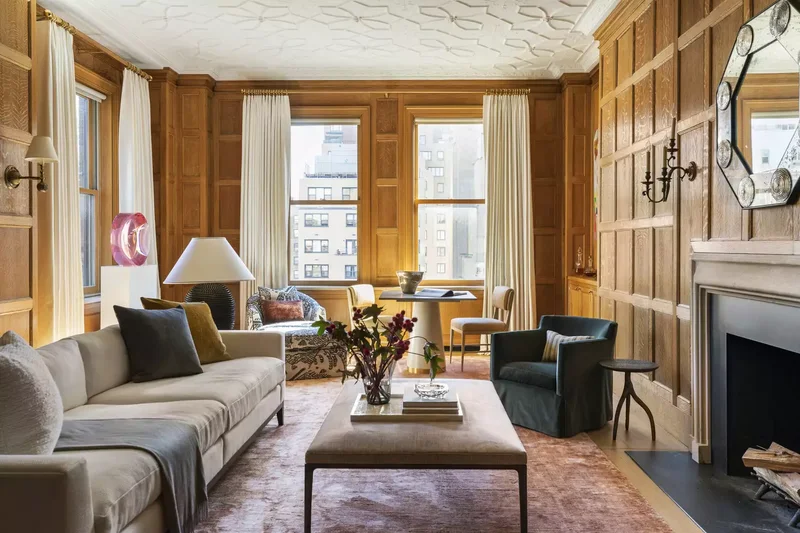
Credit: Design byMarie Flanigan Interiors/ Photo by Julie Soefer
Transform your traditional living room into a transitional space by taking a lighter, fresher approach to existing features.
You might lighten dark wood paneling or add decorative ceiling treatments that feel contemporary. This transitional approach lets you honor your home’s original character while updating it for modern living and current design sensibilities that feel fresh and relevant.
24. Work With Rustic Architectural Elements
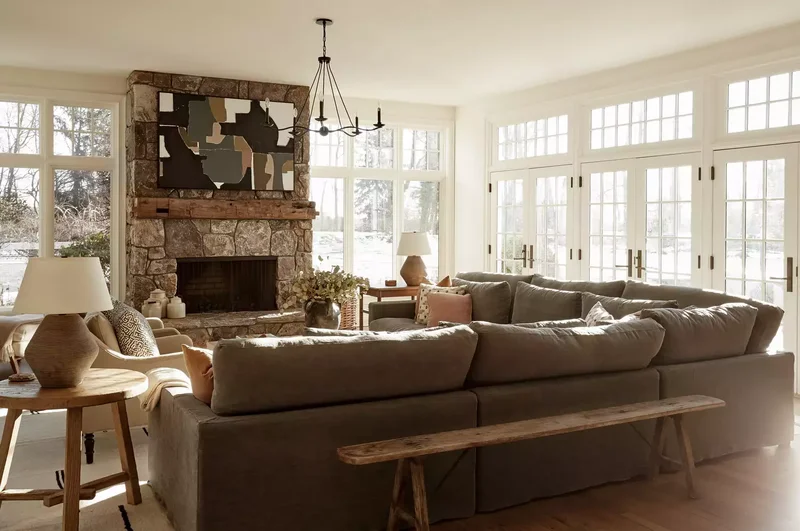
Credit: Becca Interiors
You can elevate rustic features like stone fireplaces by surrounding them with refined transitional furnishings and decor.
Paint walls white, add comfortable earth-toned furniture, and incorporate natural wood accents for balance. This approach maintains a relaxed, approachable feel while bringing sophistication to spaces that might otherwise feel too casual or cabin-like for your taste.
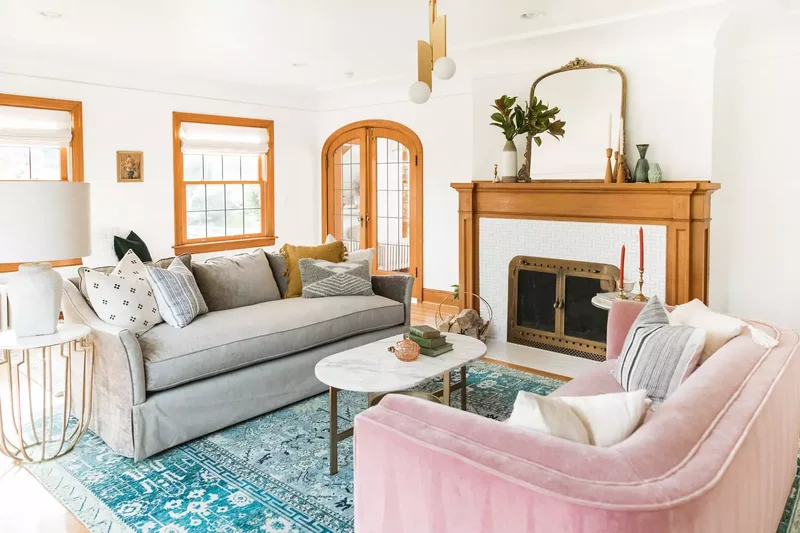
25. Energize With Strategic Color Pops
Credit: Jessica Nelson Design/Carina Skrobecki Photography
While neutrality defines most transitional spaces, you can absolutely inject personality with carefully chosen color accents.
Try adding a vibrant vintage rug or a boldly upholstered sofa in unexpected shades. These deliberate pops of color energize your cozy living room while maintaining the balanced, sophisticated foundation that makes transitional design so timelessly appealing and livable.
Final Thoughts
You now have 25 beautiful ways to create the perfect transitional living room that blends modern and traditional elements seamlessly.
Remember, the key to success is maintaining balance—mix classic architectural details with contemporary furnishings, blend textures thoughtfully, and stick to a cohesive neutral palette with strategic color accents.
Start with one or two ideas that resonate with your personal style, and you’ll create a timeless space that feels both elegant and comfortable for years to come.
