
Your vegetable garden deserves more than just function—it needs personality and style too.
The right trellis transforms climbing plants into stunning vertical displays while maximizing your growing space. Whether you’re working with raised beds or containers, these creative support structures add architectural interest that makes your edible garden look absolutely gorgeous.
Let’s explore beautiful ways to help your vegetables climb in style.
01. Add Structure with Pyramid Shapes
Credit: Kritsada Panichgul
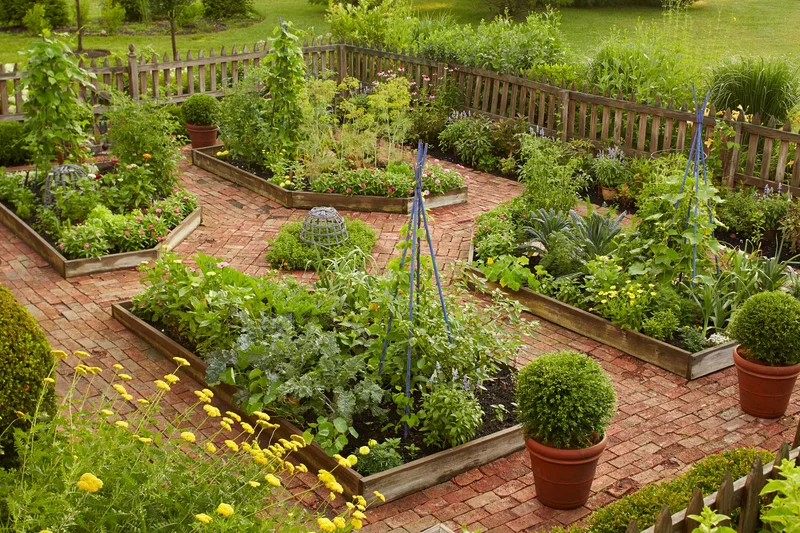
You’ll love how pyramid-shaped tuteurs bring instant elegance and vertical drama to your raised bed garden.
Position these classic structures at the corners of each bed to create beautiful focal points that guide the eye upward. They add that touch of formal garden style while giving your climbing vegetables the sturdy support they need to thrive and produce abundantly.
02. Spread Out with Fan Designs
Credit: Carson Downing
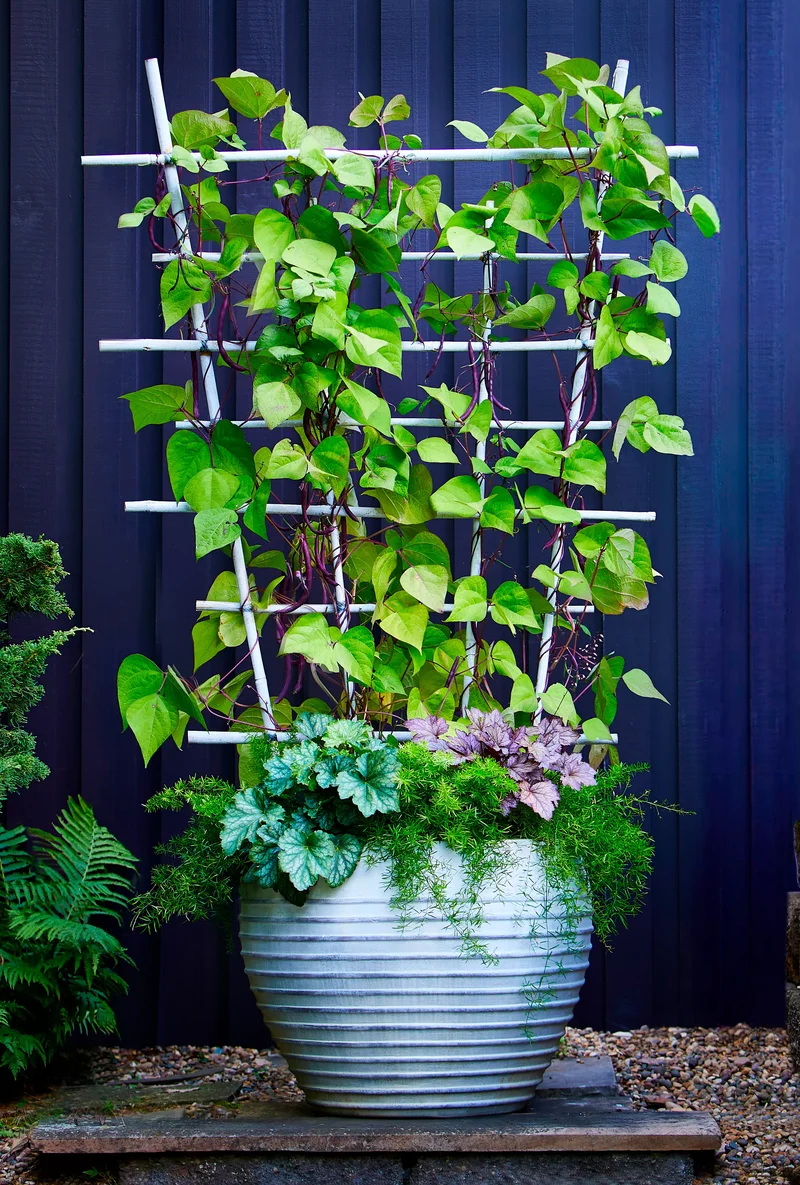
A fan-shaped trellis gives your climbing beans and peas room to spread across a wider surface area as they grow tall.
This design works beautifully in both containers and garden beds, creating a lush green backdrop against any wall or fence. You can easily make one yourself using bamboo poles and cord, or grab a ready-made version from your local garden center.
03. Choose Industrial Metal Supports
Credit: Caitlin Atkinson
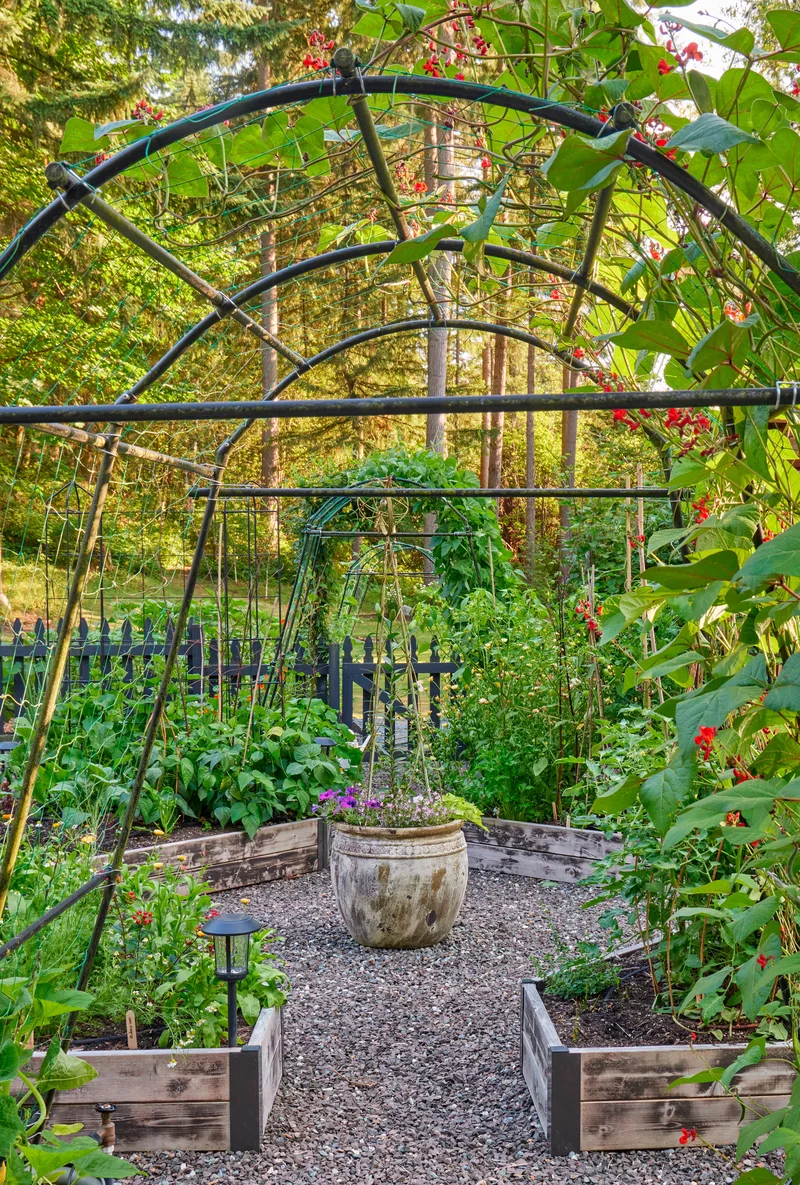
Steel trellises bring modern sophistication to your vegetable garden while providing incredibly sturdy support for heavy vining crops.
Add netting over the metal framework to give tendrils plenty of places to grip and climb. The sleek industrial look pairs beautifully with rustic wooden raised beds, creating an interesting contrast that elevates your entire garden design.
04. Keep Things Minimal with Wire

Credit: Kindra Clineff
Sometimes the best trellis is one that practically disappears, letting your plants take center stage.
A slim wire and metal structure provides all the strength your cucumbers need without overwhelming your garden’s visual appeal. This understated approach works perfectly when you want colorful flowers and foliage to remain the stars of the show while still supporting productive vegetable growth.
05. Embrace Natural Rustic Charm
Credit: Carson Downing
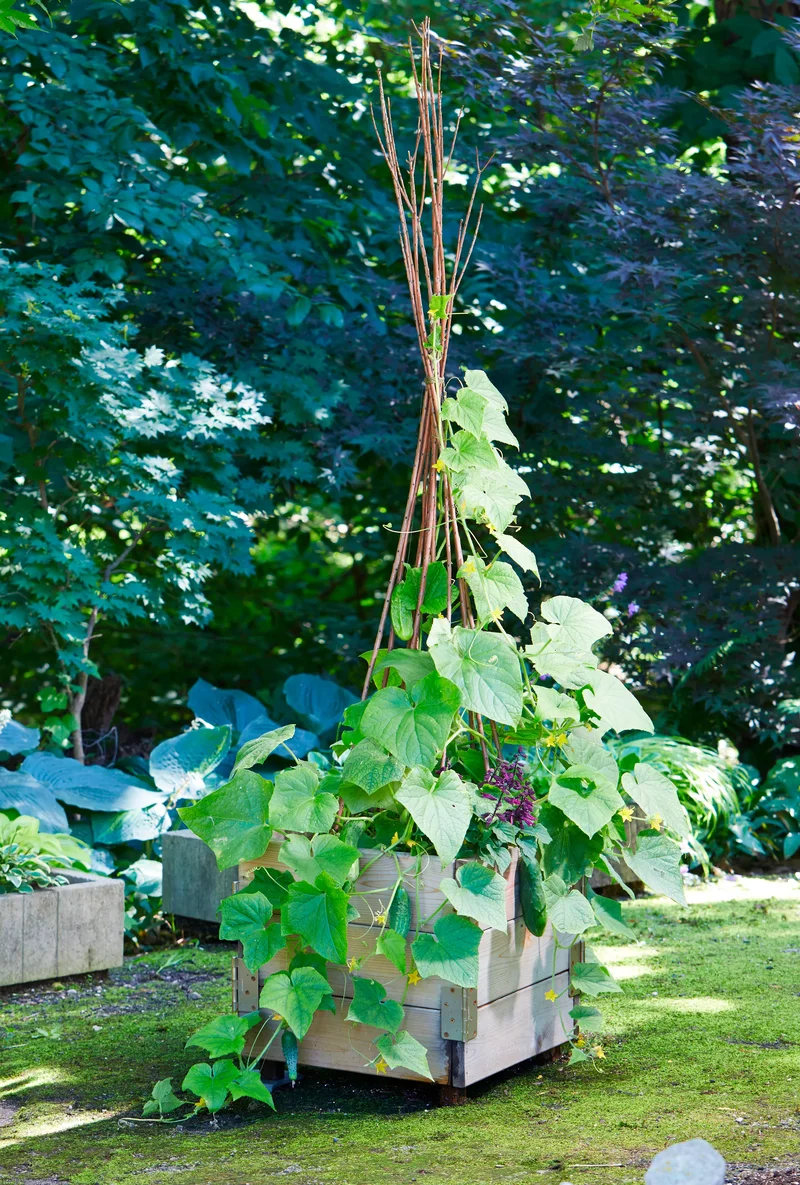
Wooden poles lashed together with natural twine create an effortlessly rustic look that feels right at home in any garden setting.
You can use willow branches, bamboo, or even sturdy twigs from your own yard for an authentic handmade appearance. These natural supports typically last several seasons and add wonderful texture and warmth that complements your growing vegetables perfectly.
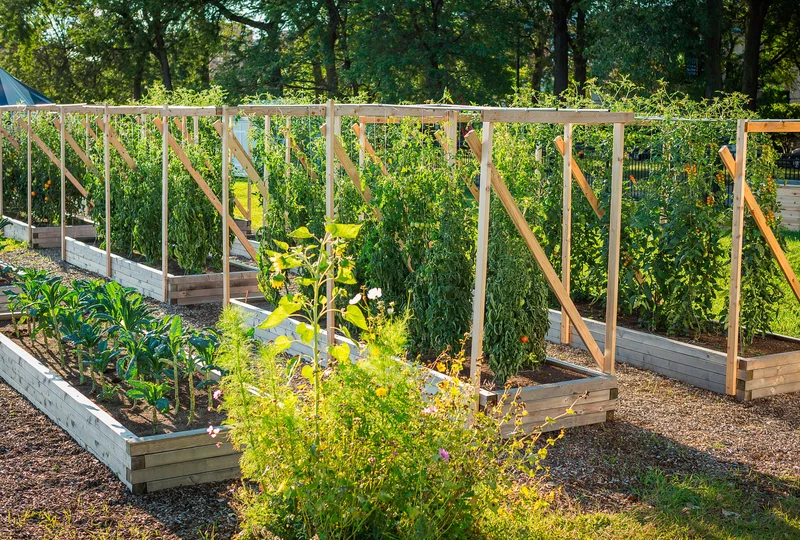
06. Create String Supports for Tomatoes
Credit: Bob Stefko
A twine trellis offers an elegant solution for keeping your tomato plants organized and productive throughout the growing season.
Run garden twine from the base of each plant up to a wooden frame overhead, then use tomato clips to gently secure the main stem as it grows. This flexible system lets you adjust support exactly where needed without damaging delicate stems or branches.
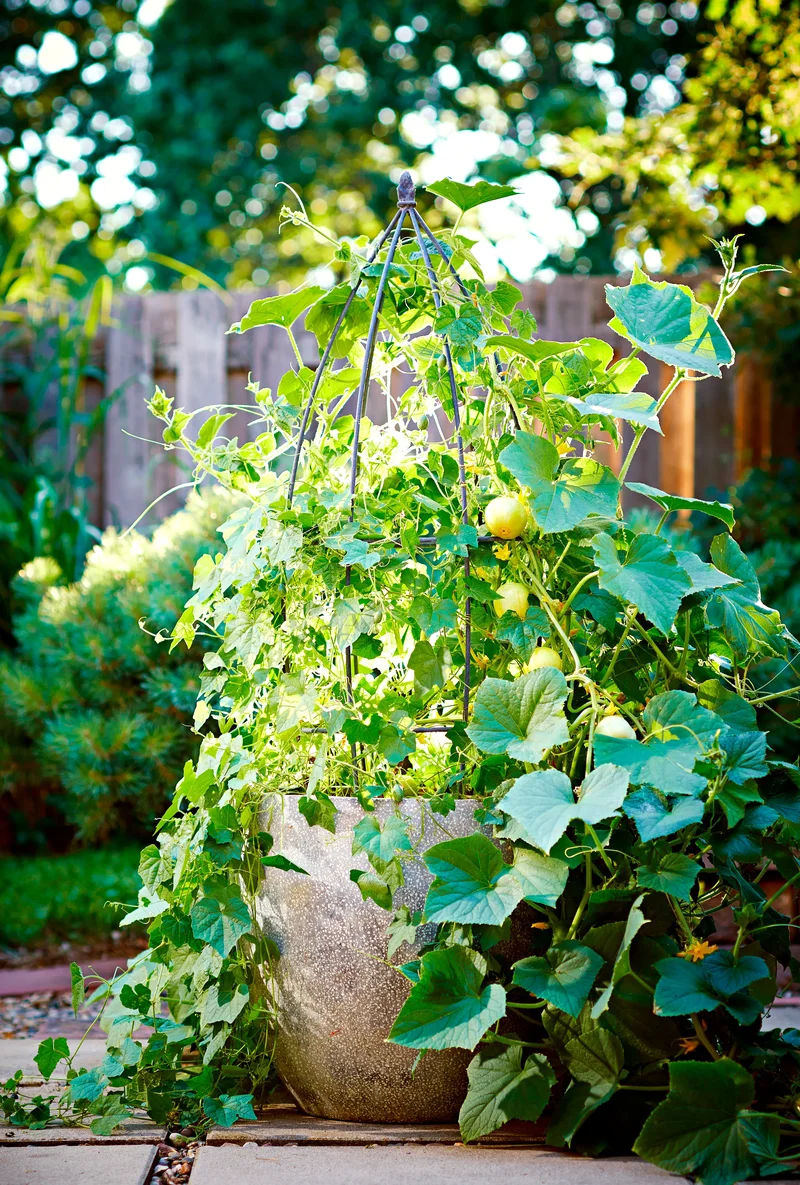
07. Give Container Gardens Vertical Interest
Credit: Carson Downing
Your patio containers can produce amazing harvests when you add vertical supports that encourage upward growth.
Metal stakes and cages work beautifully for potted tomatoes and cucumbers, especially the compact dwarf varieties bred specifically for container growing. These supports add architectural height to your outdoor space while maximizing production in limited square footage.
08. Install Romantic Garden Archways

Credit: Carson Downing
Garden arches aren’t just for roses—they create magical passageways through your vegetable garden that feel absolutely enchanting.
Position them between raised beds to define pathways or mark entry points into different garden zones. Climbing beans and peas transform these structures into lush green tunnels that combine beauty with serious productivity in the most delightful way.
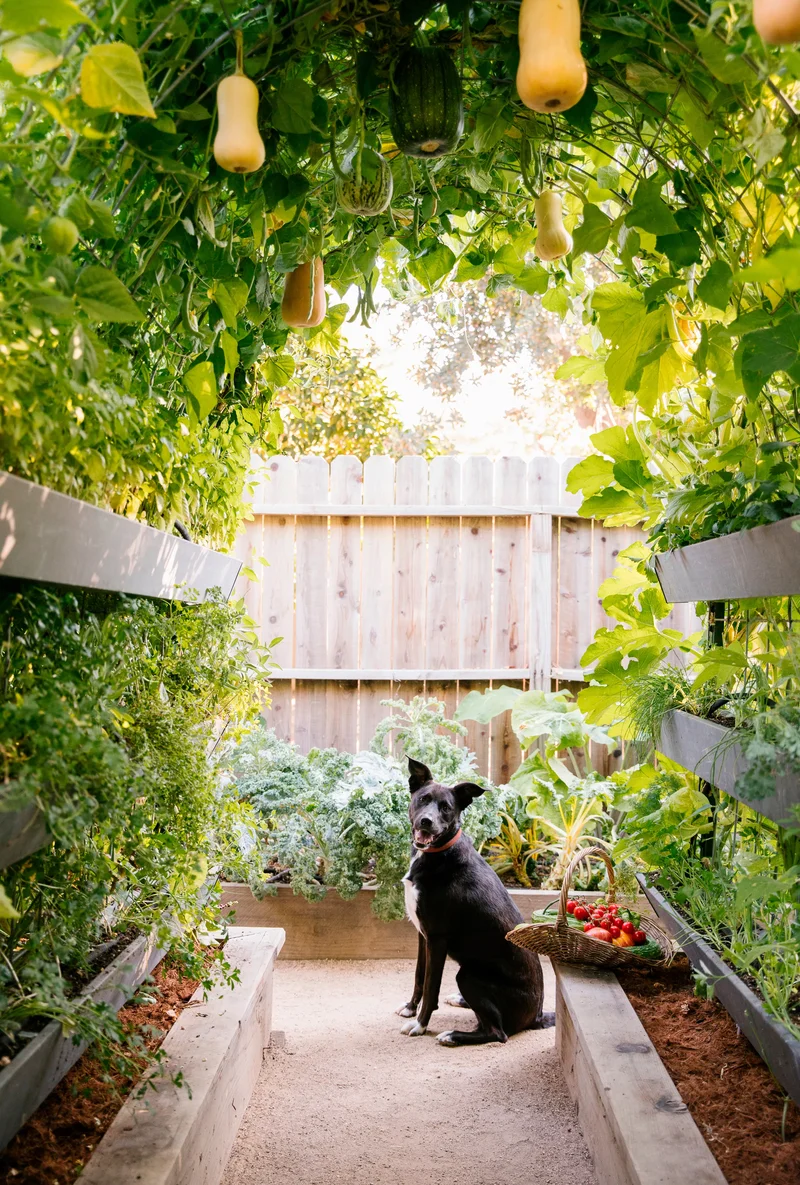
09. Build Multi-Purpose Structures
Credit: Jessica Sample
Heavy-duty hog wire stretched between sturdy posts creates a trellis strong enough to support even the heaviest squash vines.
This type of structure can double as a shaded walkway during summer and transform into a protective greenhouse when covered with plastic in winter. You’re getting year-round functionality from one well-built framework that serves your garden through every season beautifully.
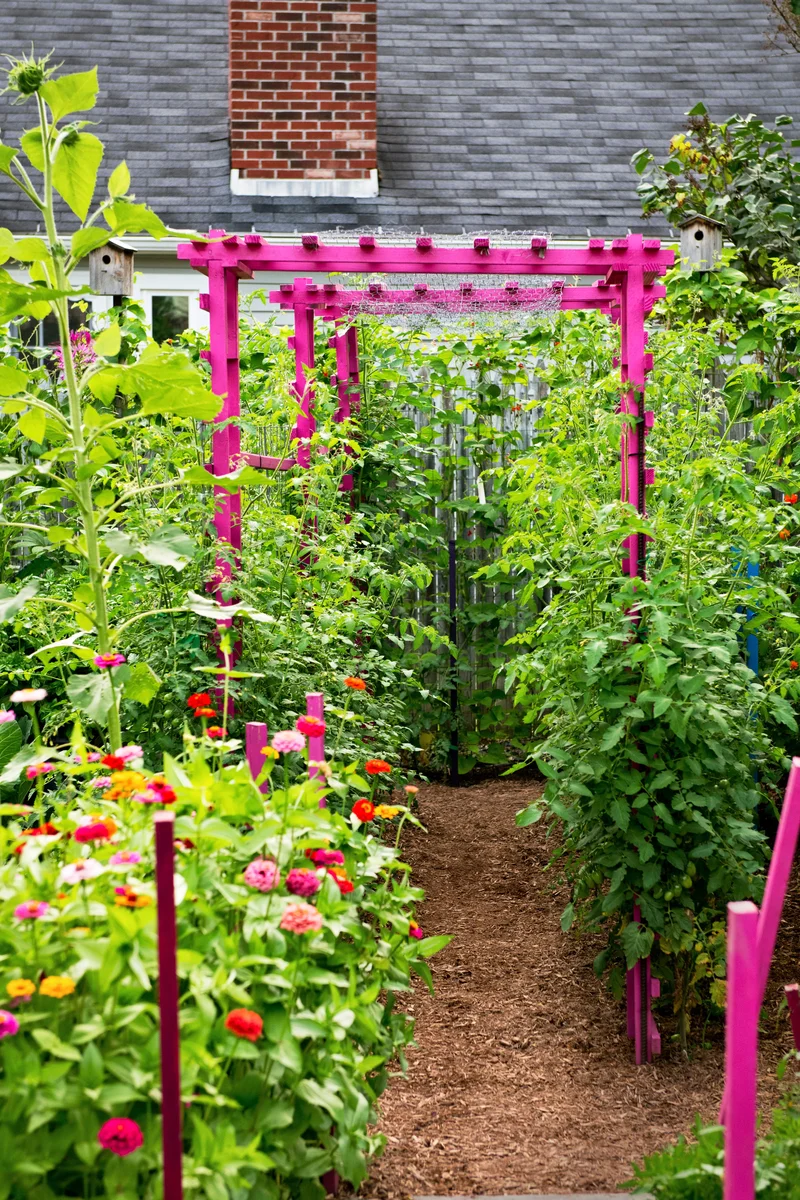
10. Make Bold Color Statements
Credit: Gabriella Herman
Who says vegetable garden structures need to blend into the background?
Paint your wooden trellises in vibrant, eye-catching colors that reflect your personal style and add instant personality to your growing space. A bold shade like electric pink or sunny yellow turns functional supports into garden art that makes your tomato patch feel like a designer outdoor room.
11. Try Simple Bamboo Grids
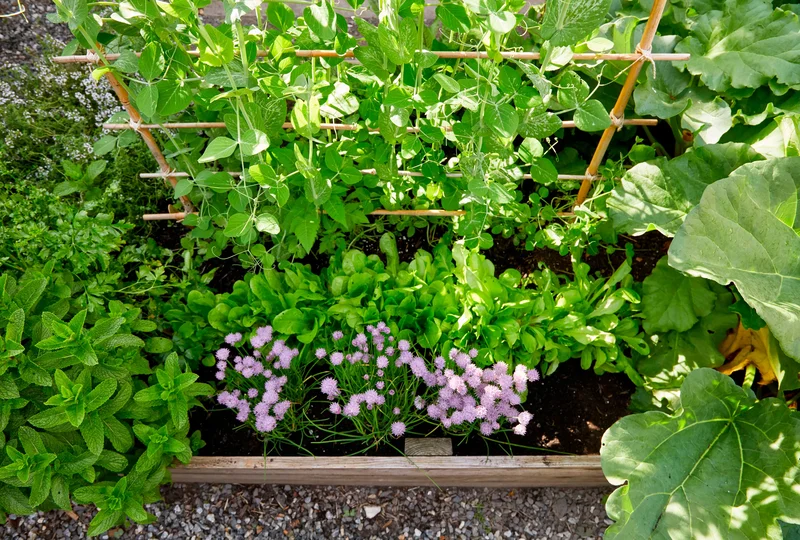
Credit: Dana Gallagher
A grid pattern made from lashed bamboo poles offers the perfect DIY solution for supporting delicate pea tendrils and bean vines.
The narrow poles give climbing plants plenty of spots to grab onto as they grow upward. This natural, handcrafted look brings organic charm to your beds while being incredibly budget-friendly and easy to customize to any size you need.
12. Match Your Garden Materials
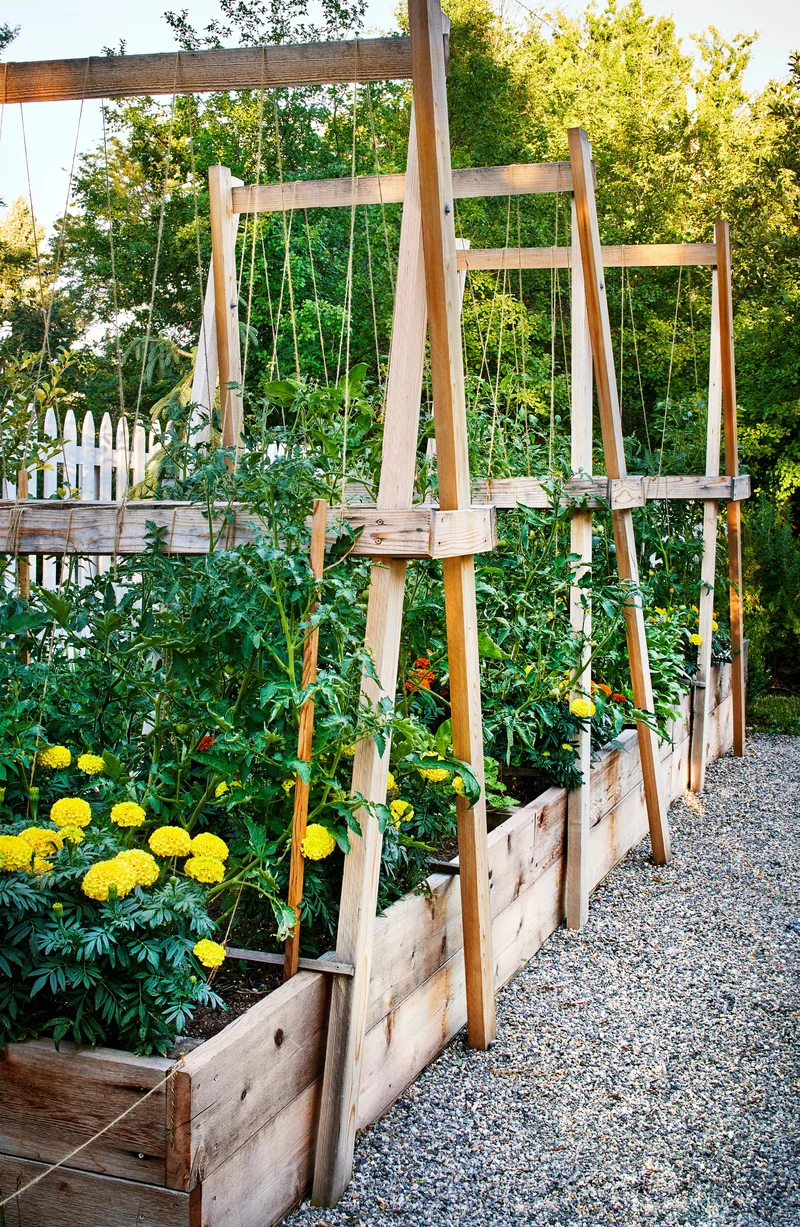
Credit: David Patterson
Create a cohesive, designer look by building all your vegetable supports from the same material as your raised beds.
Cedar trellises that match cedar planters give your garden a polished, intentional appearance that rivals any indoor room design. Add garden twine for plant support, and you’ve got a system that works beautifully for tomatoes in summer and climbing peas in spring.
13. Work with Classic A-Frames
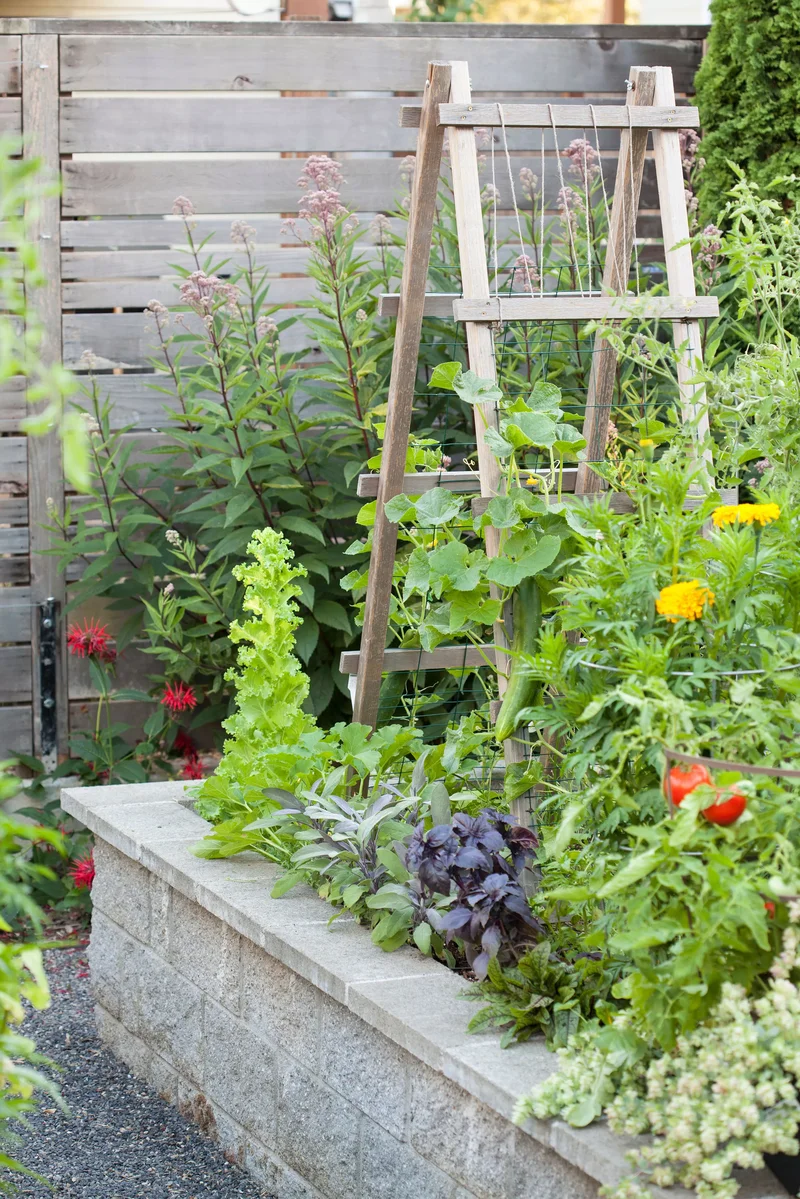
Credit: Laurie Black
The timeless A-frame trellis design provides reliable support while bringing traditional garden charm to your vegetable beds.
Add horizontal twine between the wooden slats to give small tendrils extra places to wrap and climb as they reach upward. The best part? These structures fold completely flat for easy storage when the growing season ends and winter arrives.
14. Get Creative with Custom Shapes
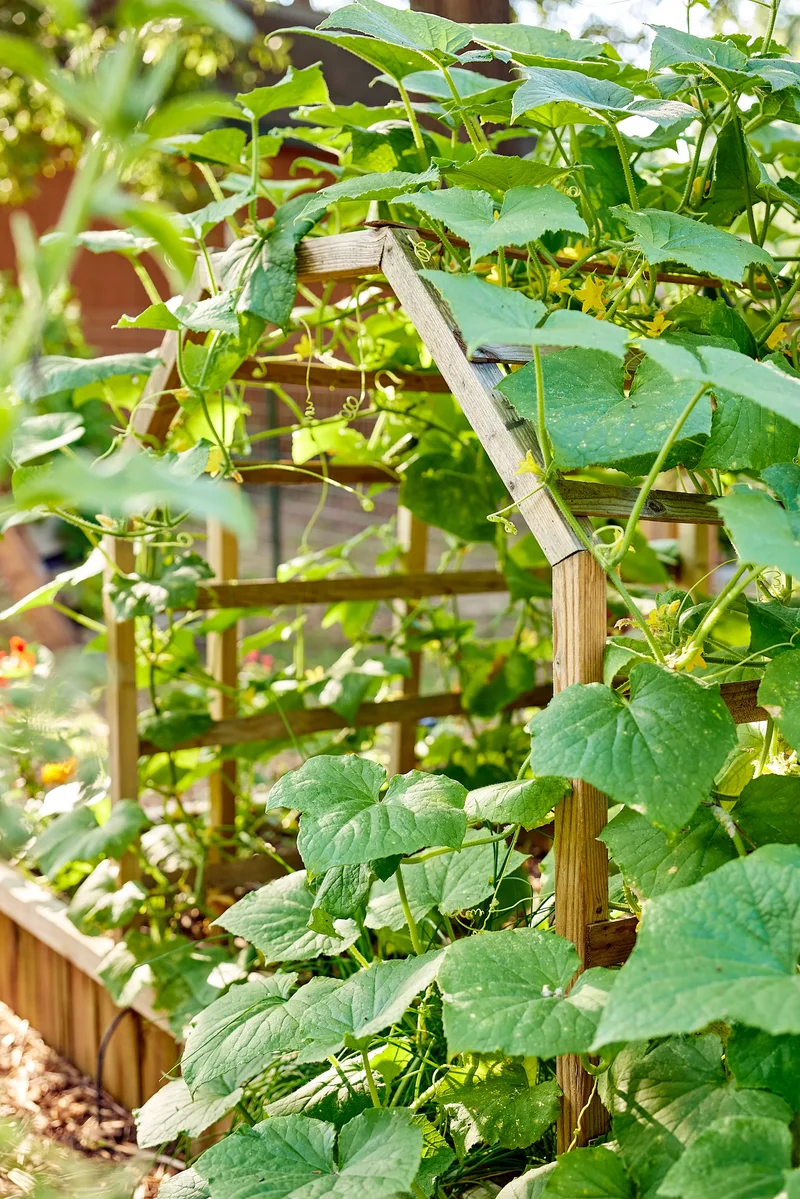
Credit: Hector Sanchez
Why settle for standard when you can design a trellis with unique architectural interest that showcases your personal creativity?
A squared-off or geometric design built from reclaimed wood adds artistic flair while providing excellent air circulation for cucumbers and melons. Custom shapes let you express your style while solving specific growing challenges in your garden space beautifully.
Final Thoughts
Your vegetable garden can be just as beautiful as it is productive when you choose trellises that reflect your personal style.
Whether you prefer rustic natural materials, sleek modern metal, or bold colorful statements, the right support structures transform ordinary vegetable beds into stunning garden features. These vertical elements add height, structure, and visual interest while helping your plants thrive.
Start with one or two trellises this season and watch your garden reach new heights in both beauty and harvest.
